
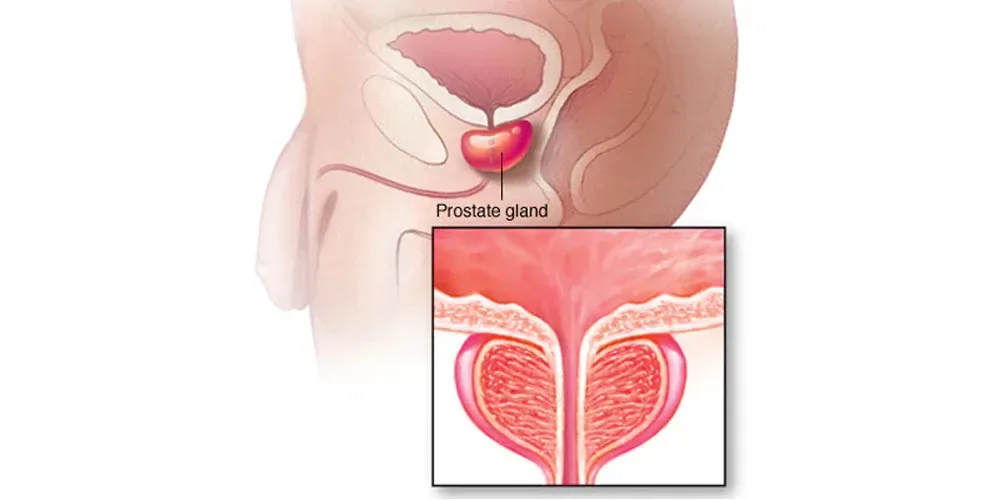
Holmium Laser Enucleation of the Prostate (HoLEP) is a minimally invasive endoscopic surgical procedure used to treat selected patients with urinary obstruction caused by benign prostatic hyperplasia (BPH), commonly known as an enlarged prostate.
During HoLEP, a holmium laser is used to separate enlarged prostate tissue that is obstructing urinary flow. The tissue is then removed through the urinary passage. An external abdominal incision is generally not required.
Dr. Prakash Sankapal, a urologist in Navi Mumbai , provides consultations at NewEra Hospitals, Vashi, and JP Kidney Care, Ulwe. Clinical assessment helps determine whether HoLEP or another treatment option may be appropriate.
What Is HoLEP Surgery?
HoLEP stands for Holmium Laser Enucleation of the Prostate . It is an endoscopic surgical treatment for urinary obstruction associated with benign prostate enlargement.
The prostate is a gland located below the bladder. It surrounds part of the urethra, which carries urine out of the body.
With benign prostatic hyperplasia (BPH) , enlarged prostate tissue may compress the urethra, leading to difficulty passing urine.
HoLEP uses laser energy to separate the enlarged inner prostate tissue. A specialised instrument is then used to remove that tissue.
Removed tissue can be sent for laboratory examination. HoLEP treats obstruction associated with BPH; it is not intended as a treatment for prostate cancer.
What Symptoms May Occur with an Enlarged Prostate?
Benign prostate enlargement may be associated with lower urinary tract symptoms. The severity of symptoms varies between patients.
- Weak urinary stream: Reduced force of urine flow.
- Difficulty starting urination: A delay before urine begins.
- Frequent urination: Needing to pass urine more often than usual.
- Nocturia: Waking at night to urinate.
- Incomplete bladder emptying: Feeling that urine remains after passing urine.
- Urinary urgency: Experiencing a sudden need to urinate.
- Urinary retention: Difficulty or inability to empty the bladder.
Important: Urinary symptoms are not always caused by prostate enlargement. Other conditions, including urinary tract infection , bladder disorders and urethral stricture disease , can produce similar symptoms.
Sudden inability to pass urine requires urgent medical assessment.
When Is HoLEP Considered for an Enlarged Prostate?
HoLEP may be considered when benign prostate enlargement causes urinary obstruction requiring surgical management.
Factors influencing the treatment decision include:
- Persistent symptoms: Urinary symptoms that remain troublesome despite appropriate management.
- Urinary retention: Episodes of difficulty emptying the bladder, including situations requiring catheterisation.
- Prostate size: HoLEP may be considered across a range of prostate sizes.
- Response to medication: Surgery may be discussed when medicines are ineffective, unsuitable or poorly tolerated.
- Associated complications: Recurrent urinary retention, selected urinary infections or bladder stones related to urinary obstruction.
- Overall health: Other medical conditions, anaesthesia considerations and patient preferences.
Not everyone with an enlarged prostate needs surgery. Observation, lifestyle measures or medicines may be appropriate in selected cases.
How Is an Enlarged Prostate Evaluated Before HoLEP?
Before recommending laser prostate surgery, the urologist assesses urinary symptoms, medical history and relevant investigations.
Evaluation may include:
- Medical history and medication review.
- Assessment of urinary symptoms and their effect on daily life.
- Physical examination, including prostate assessment when appropriate.
- Urine examination and selected urine tests.
- Kidney function investigations when indicated.
- Ultrasound or other assessment of prostate size.
- Post-void residual urine measurement.
- Uroflowmetry to evaluate urine flow.
- PSA testing or other investigations after appropriate clinical discussion.
Not every patient requires every test. The investigation plan depends on individual clinical findings.
How Is HoLEP Laser Prostate Surgery Performed?
HoLEP is performed in an appropriately equipped surgical facility by a trained urologist. The exact surgical approach may vary according to the patient’s condition.
Step 1: Preoperative Assessment
The treating team reviews medical history, laboratory investigations, imaging, medicines and suitability for anaesthesia and surgery.
Step 2: Anaesthesia
HoLEP is commonly performed under general or spinal anaesthesia. The choice depends on the anaesthetic assessment.
Step 3: Endoscopic Access
A specialised endoscopic instrument is introduced through the urethra to reach the prostate. An external abdominal incision is generally not needed.
Step 4: Laser Enucleation
The holmium laser is used to separate enlarged prostate tissue contributing to urinary obstruction.
Step 5: Tissue Removal
The separated tissue is removed using specialised equipment. Tissue can be sent for histopathological examination.
Step 6: Urinary Catheter
A temporary urinary catheter is generally placed to allow bladder drainage after surgery.
Catheter removal timing depends on postoperative recovery and the treating team’s assessment.
Step 7: Postoperative Monitoring
After surgery, the patient is monitored for bleeding, urinary drainage, discomfort and recovery from anaesthesia.
Hospital discharge and follow-up are individualised.
What Are the Possible Benefits of HoLEP?
HoLEP has characteristics that may make it an appropriate surgical option for selected patients.
- Removal of prostate tissue contributing to urinary obstruction.
- Endoscopic treatment through the urinary passage.
- Usually no external abdominal incision.
- Potential improvement in urine flow and associated symptoms.
- Applicability across different prostate sizes.
- Availability of removed tissue for laboratory examination.
- Potential for a relatively short hospital stay in selected patients.
Important: These are potential characteristics and benefits, not guaranteed outcomes. Some urinary symptoms may persist because of bladder dysfunction or other conditions.
What Are the Risks and Possible Complications of HoLEP?
HoLEP is a surgical procedure and carries recognised risks.
- Bleeding or blood in the urine.
- Urinary tract infection.
- Temporary pain or burning during urination.
- Increased urinary frequency or urgency.
- Temporary or, less commonly, persistent urinary incontinence.
- Changes in ejaculation, including retrograde ejaculation or absence of forward ejaculation.
- Urethral narrowing or bladder neck scarring.
- Persistent urinary symptoms.
- Anaesthesia-related complications.
- Need for additional evaluation or treatment.
Individual risk depends on prostate characteristics, age, bladder function, medical conditions and other factors.
For more information about urinary narrowing, read about urethral stricture disease .
Recovery After HoLEP Surgery
Recovery varies according to the procedure, overall health and postoperative findings.
Some patients can leave hospital after a short observation period. Others may need additional monitoring.
Temporary symptoms can include:
- Mild blood in the urine.
- Burning or discomfort during urination.
- Increased urinary frequency or urgency.
- Temporary urinary leakage.
- Catheter-related discomfort.
Postoperative instructions may include:
- Taking prescribed medicines as directed.
- Following individual fluid intake advice.
- Avoiding heavy lifting and strenuous activity for the advised period.
- Following catheter care instructions when applicable.
- Attending scheduled follow-up consultations.
- Returning to work and normal activities according to recovery.
Seek urgent medical attention: Fever, chills, inability to pass urine, heavy bleeding, large blood clots, severe pain or worsening symptoms after surgery require prompt medical assessment.
HoLEP vs TURP vs Other Prostate Treatments
Treatment for enlarged prostate and BPH symptoms depends on symptom severity, prostate size, medical findings and individual preferences.
| Treatment | General Description |
|---|---|
| HoLEP | Laser enucleation and removal of prostate tissue through the urethra. |
| TURP | Transurethral resection of prostate tissue using an endoscopic instrument. |
| Other Laser Procedures | Selected laser procedures that remove or vaporise obstructing prostate tissue. |
| Medication | Medicines that may reduce urinary symptoms or prostate size in selected patients. |
| Observation | Monitoring and lifestyle measures when immediate treatment is not required. |
Each treatment has different advantages, limitations and risks. The appropriate choice requires clinical assessment.
Medical reference: European Association of Urology Guidelines on Male Lower Urinary Tract Symptoms .
Can Urinary Symptoms Return After HoLEP?
HoLEP may improve urinary obstruction caused by BPH, but it does not guarantee that urinary symptoms will never recur.
Persistent or recurrent symptoms may occur because of bladder dysfunction, infection, urethral narrowing or other urinary conditions.
Further assessment may be recommended when symptoms persist or new symptoms develop.
HoLEP Consultation in Vashi and Ulwe, Navi Mumbai
Dr. Prakash Sankapal provides consultations for prostate-related urinary symptoms at NewEra Hospitals, Vashi, and JP Kidney Care, Ulwe.
NewEra Hospitals – Vashi
Sion–Panvel Highway,Sector 7, Vashi,
Navi Mumbai,
Maharashtra 400703.
Phone: +91 8007542142
JP Kidney Care – Ulwe
Plot No. 70,Moreshwar Heritage,
Sector 5, Ulwe,
Navi Mumbai,
Maharashtra 410206.
Phone: +91 8591009591
Consultation may involve reviewing urinary symptoms, previous investigations, medication history and available treatment approaches.
These are consultation locations. The facility where any surgical procedure is performed should be confirmed separately.
For updated contact details and timings, visit the urology consultation information page .
Frequently Asked Questions About HoLEP Surgery
1. What is HoLEP surgery for an enlarged prostate?
HoLEP is an endoscopic laser procedure used to remove enlarged prostate tissue causing urinary obstruction in selected patients with BPH.
2. Is HoLEP a minimally invasive procedure?
HoLEP uses instruments passed through the natural urinary passage and generally does not require an external incision. However, it remains surgery with recognised risks.
3. Is HoLEP surgery painful?
Anaesthesia is used during HoLEP. Afterwards, some patients experience urinary burning, discomfort, bleeding or catheter-related symptoms.
4. Does every enlarged prostate require HoLEP?
No. Some patients can be managed with observation, lifestyle measures or medicines. Surgery is considered according to symptoms and clinical findings.
5. How long does recovery after HoLEP take?
Recovery varies. Some patients resume light activities within a few days, while others need more time. Urinary symptoms may take longer to settle.
6. Is a urinary catheter required after HoLEP?
A temporary urinary catheter is generally used after HoLEP. Its removal depends on postoperative assessment and recovery.
7. Can HoLEP affect ejaculation or continence?
Yes. Changes in ejaculation are common after HoLEP, and temporary urinary leakage may occur. Persistent incontinence is also possible. Individual risks should be discussed before surgery.
8. Does HoLEP treat prostate cancer?
No. HoLEP is used to relieve obstruction caused by benign prostate enlargement. It is not a definitive prostate cancer treatment.
9. What is the difference between HoLEP and TURP?
Both treat urinary obstruction caused by BPH. HoLEP uses laser energy to enucleate enlarged tissue, while TURP removes obstructing tissue using a resection instrument.
10. Where can I get information about HoLEP in Navi Mumbai?
Dr. Prakash Sankapal provides urology consultations at NewEra Hospitals, Vashi, and JP Kidney Care, Ulwe. See the contact page for consultation details.
Medical References
The following sources provide further information about enlarged prostate and its management.
Medical Disclaimer: Website content and visuals are for general informational, educational and representational purposes only, may not reflect individual patient conditions or outcomes, and do not replace personalised medical advice, diagnosis or clinical assessment.