
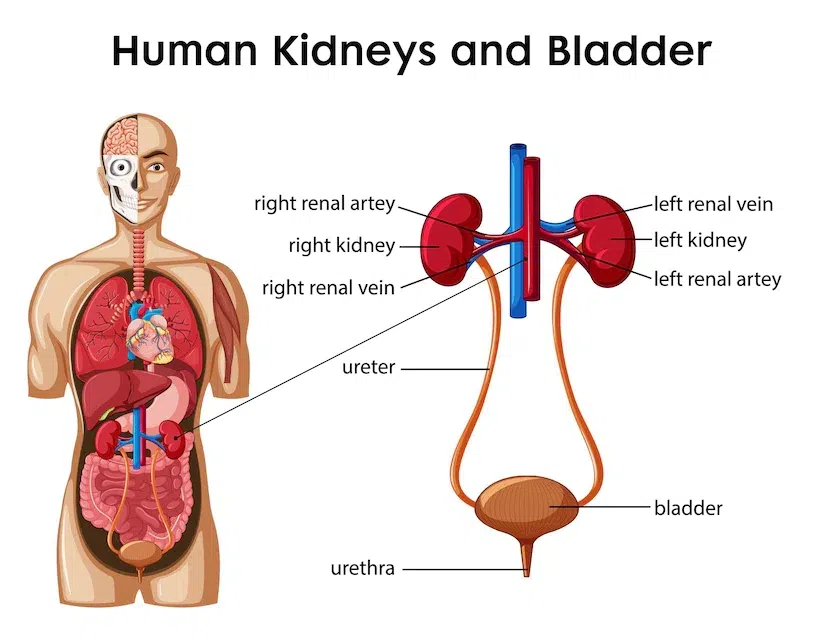
Urinary health involves how your kidneys, bladder and urinary passages work together to produce, store and pass urine. Understanding this system can help you recognise changes and know when medical assessment may be needed.
Healthy habits can support urinary function, but they cannot prevent every condition. Persistent burning, leakage, difficulty passing urine or blood in urine should be assessed rather than managed through lifestyle changes alone.
The urinary system removes waste and extra fluid from your body through urine.
| Part | Main function |
|---|---|
| Kidneys | Filter blood and produce urine. |
| Ureters | Carry urine from the kidneys to the bladder. |
| Bladder | Stores urine before you pass it. |
| Urethra | Carries urine from the bladder out of the body. |
Muscles and nerves coordinate bladder storage and emptying. Changes affecting these structures can cause problems with urine flow, urgency or bladder control.
The National Institute of Diabetes and Digestive and Kidney Diseases provides an overview of urologic conditions and urinary health.
Your usual urinary pattern is a useful starting point. Pay attention to new, persistent or worsening changes, including:
These symptoms can overlap across different conditions. Their timing, severity and associated symptoms help guide assessment, but symptoms alone may not establish a diagnosis.
A urinary tract infection, or UTI, usually develops when bacteria enter the urinary tract. A bladder infection may cause burning, urgency, frequent urination and lower abdominal discomfort.
Cloudy or strong-smelling urine can occur, but these changes alone do not confirm an infection. Assessment considers accompanying symptoms and urine testing when appropriate.
Do not take leftover antibiotics or another person’s prescription. Treatment should be selected according to the clinical situation.
Read more about urinary tract infections.
Kidney stones are solid deposits that form from substances in urine. Some cause no symptoms, while others cause sharp pain in the side, back, lower abdomen or groin. Blood in urine, nausea or vomiting may also occur.
Assessment helps identify the stone’s size, location and whether it is causing obstruction or other concerns. Not every stone needs surgery; management depends on the findings and the person’s overall health.
Learn more about kidney and ureteric stones.
The prostate surrounds part of the urethra below the bladder. Benign prostate enlargement can affect urine flow and bladder emptying.
Possible symptoms include difficulty starting urination, a weak stream, frequent urination and incomplete emptying. However, these symptoms can also have other causes. Assessment is needed before assuming that prostate enlargement is responsible.
Urinary incontinence means unintentional urine leakage. It may happen during coughing, sneezing or physical activity, or alongside a sudden urge to urinate.
Leakage should not simply be accepted as an unavoidable part of ageing. Management depends on its type and cause and may include changes in habits, guided exercises, medicines or other treatment.
Urinary retention means being unable to empty the bladder completely. It may develop gradually or happen suddenly.
Someone with gradual retention may still pass urine but notice reduced flow or incomplete emptying. Sudden inability to pass urine requires immediate medical attention.
Adequate fluid intake supports urinary health, but there is no single amount suitable for everyone. Requirements vary with activity, weather, medicines and medical conditions.
If you have heart failure, kidney failure or a prescribed fluid restriction, follow your clinician’s advice. Drinking excessive water is not a treatment for persistent urinary symptoms.
Try to use the toilet when needed rather than repeatedly holding urine for long periods. Allow time to empty your bladder without rushing or straining.
Persistent difficulty emptying needs assessment rather than repeated attempts to force urine out.
Coffee, tea, energy drinks and other caffeinated drinks may worsen urgency or frequency in some people. Alcohol may also affect symptoms.
If you notice a pattern, reducing these drinks may help. Avoid severely restricting all fluids to reduce toilet visits.
Constipation can contribute to bladder symptoms. Fibre-containing foods, suitable physical activity and an appropriate fluid intake can support bowel function.
Persistent constipation may require further advice or treatment.
Regular activity and maintaining a suitable weight can support bladder health. Choose activities that match your health and mobility.
Pelvic floor exercises may help some types of leakage, but correct technique and an appropriate exercise plan matter.
Smoking increases the risk of bladder cancer. Smoking-related coughing may also worsen leakage.
Stopping smoking supports urinary and overall health.
The NIDDK’s guidance on bladder health and prevention of bladder control problems explains these habits further.
If you have had kidney stones, prevention advice should consider the stone type and investigation results.
Recommendations may involve fluid intake and changes to salt, animal protein or other dietary components. Avoid removing entire food groups or taking supplements without appropriate advice.
Seek immediate care if you suddenly cannot pass urine, particularly with lower abdominal pain or swelling.
Urgent assessment is needed for:
Urinary symptoms during pregnancy, or in someone with diabetes, a urinary catheter or reduced immunity, also warrant prompt medical advice.
The NHS provides further information on UTI symptoms and situations requiring urgent assessment.
Assessment usually begins with your symptoms, medical history, medicines and previous treatment. Depending on the concern, an examination and selected investigations may be recommended.
| Assessment or investigation | What it may help clarify |
|---|---|
| Symptom and medicine review | Patterns, possible contributing factors and previous treatment. |
| Urine tests | Signs of infection, blood or other abnormalities. |
| Blood tests | Kidney function or other relevant findings. |
| Ultrasound or other imaging | Structural concerns, stones or urinary obstruction. |
| Post-void residual measurement | How much urine remains after urination. |
| Urine-flow testing | The pattern and speed of urine flow. |
Not everyone needs every test. Investigations should answer a specific clinical question and help guide management.
Bring existing reports, relevant scan images and a current medicine list. A bladder diary recording drinks, toilet visits, urgency and leakage may also help identify patterns.
Drink an appropriate amount of fluid, avoid routinely delaying urination, manage constipation and stay physically active. Notice whether caffeine worsens symptoms. These habits support health but do not replace assessment of persistent problems.
No. Infection is one possible cause, but irritation and other conditions can produce similar symptoms. Persistent or recurring burning should be assessed rather than automatically treated with antibiotics.
Water can help prevent dehydration, but it does not replace assessment or prescribed treatment for a bacterial infection. Follow any existing fluid restrictions and seek advice if symptoms persist or worsen.
No. Reduced flow may result from prostate enlargement, urethral narrowing or problems with bladder contraction. Assessment helps identify the cause before treatment is recommended.
No. Leakage becomes more common with age, but it is a medical concern that can be assessed. Management depends on the type of leakage, contributing factors and individual circumstances.
Yes. Visible blood in urine needs prompt medical assessment, even if it happens only once. Heavy bleeding, blood clots or difficulty passing urine require urgent attention.
Not necessarily. The need for imaging depends on your symptoms, examination and existing results. Some concerns can initially be assessed through clinical review and urine testing; others may require imaging or additional investigations.
Disclaimer: Website content and visuals are for general informational, educational and representational purposes only, may not reflect individual patient conditions or outcomes, and do not replace personalised medical advice, diagnosis or clinical assessment.
Plot no 70, Moreshwar Heritage, Sector 5, Ulwe, Navi Mumbai, Maharashtra 410206
For Booking: +91 8591009591
Chat With Us
49, Sion – Panvel Hwy, Sector 7, Vashi, Navi Mumbai, Maharashtra 400703
For Booking: +91 8007542142
Chat With Us