
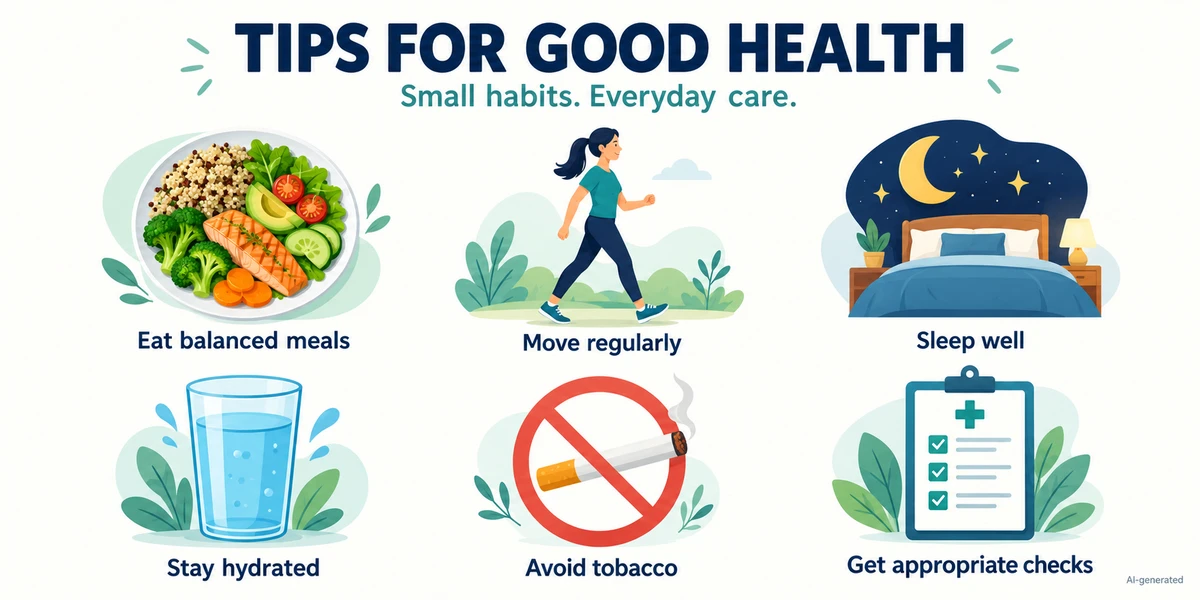
Good health is supported by everyday habits: eating balanced meals, staying active, sleeping adequately, avoiding tobacco and receiving appropriate preventive care. These actions can reduce the risk of several long-term conditions, although they cannot prevent every illness.
The most useful changes are realistic enough to maintain. Your age, medical history, physical abilities and existing treatment should guide how you apply general health advice.
A healthy diet includes variety rather than relying on a single food, supplement or restrictive eating plan.
Include vegetables, fruit, whole grains, pulses and suitable protein sources. Familiar options such as dal, beans, seasonal vegetables and whole-grain meals can form part of this pattern.
Practical changes include:
WHO recommends at least 400 grams of fruit and vegetables daily for people older than 10 years. Individual dietary restrictions may change what is suitable.
WHO recommends that adults consume less than 5 grams of salt daily, equivalent to less than 2,000 mg of sodium. This includes salt already present in food, not only what is added during cooking.
Packaged snacks, pickles, sauces and instant foods can contribute substantial amounts. Compare labels and use herbs, spices or lemon to add flavour without automatically adding more salt.
Physical activity supports cardiovascular health, strength, mobility and mental well-being.
For adults, WHO recommends:
Brisk walking, cycling, swimming and dancing are possible options. Activity can be divided into shorter sessions.
Start gradually if you have been inactive. People with medical limitations may need an adapted plan. Even some activity is beneficial, and the weekly target can be approached progressively.
Sleep supports attention, mood, metabolism and physical health. Adults aged 18–60 generally need at least seven hours each night; recommendations vary with age.
Helpful habits include:
Seek advice if you regularly struggle to sleep or remain excessively sleepy despite allowing enough time for rest. Sleep quality matters alongside duration.
Fluid requirements vary with weather, exercise, illness and medical conditions. Water is a practical everyday choice, but everyone does not need the same fixed quantity.
Drink regularly and pay attention to losses during heat or activity. If you have kidney failure, heart disease or a prescribed fluid restriction, follow your individual plan.
Drinking excessive water does not guarantee healthier kidneys. Both dehydration and fluid overload can cause problems.
For more information, read about how to keep your kidneys healthy.
All forms of tobacco are harmful, including cigarettes, bidis and smokeless tobacco. Second-hand smoke also affects health.
If you use tobacco, ask about support for stopping. Counselling and appropriate treatment can help, particularly when previous attempts have been difficult.
Alcohol is not necessary for good health. No level of consumption is completely free of health risk, and drinking less reduces exposure to harm. If you do not drink, there is no health reason to start.
Stress can affect sleep, concentration and daily functioning. Managing it does not require removing every source of pressure.
Try practical steps such as:
Seek professional support if stress, persistent low mood or anxiety interferes with daily life. Self-care can complement treatment when treatment is needed.
Healthy habits remain important when you have diabetes, high blood pressure or another long-term condition, but they do not replace prescribed treatment.
Attend reviews, take medicines as directed and discuss difficulties with side effects or adherence. Blood pressure and diabetes management are particularly relevant to protecting kidney health.
Some conditions can cause damage before symptoms appear. Feeling well is therefore not a reliable reason to stop follow-up.
Over-the-counter availability does not mean a product is suitable for everyone.
Tell your healthcare team about prescribed medicines, painkillers, herbal products and supplements. Ask about interactions and whether doses need adjustment.
NSAID painkillers can affect kidney function, particularly with prolonged use or during dehydration. Avoid taking multiple products containing the same medicine, and ask for advice during vomiting, diarrhoea or poor fluid intake.
Detox products should not replace a balanced diet or medical care. Evidence supporting cleansing programmes is limited, and some products can cause harm.
Preventive healthcare can include vaccinations, screening and assessment of individual risk.
A family history of disease can influence these decisions. There is no single testing package that suits every adult, and investigations should have a clear purpose.
Vaccination remains relevant beyond childhood. Review your vaccination history when discussing preventive care.
People with diabetes, high blood pressure, heart disease or a family history of kidney failure should discuss kidney assessment.
Testing may include blood creatinine with estimated glomerular filtration rate, or eGFR, and a urine albumin-to-creatinine ratio. Early kidney disease often has no noticeable symptoms.
Discuss the following with your healthcare professional:
| Area | What to discuss |
|---|---|
| Blood pressure | Whether readings need checking or monitoring. |
| Diabetes risk | Whether glucose testing is appropriate. |
| Cardiovascular risk | Whether cholesterol testing or further assessment is needed. |
| Cancer screening | Tests appropriate to age, risk factors and applicable guidance. |
| Vaccinations | Recommended vaccines based on age, health and previous doses. |
Balanced eating, regular movement, adequate sleep and avoiding tobacco are useful foundations. Combine them with appropriate treatment and preventive care.
Brisk walking can contribute towards aerobic activity goals. Strengthening activities are also recommended, adapted to individual ability.
No. Sleep requirements vary with age and individual needs. Adults aged 18–60 generally need at least seven hours.
No. Fluid requirements vary, and some medical conditions require restriction. Follow advice appropriate to your health.
Reference: National Kidney Foundation — Healthy HydrationNo. Supplements do not replace dietary variety, and detox products have limited supporting evidence. Specific products may be appropriate when clinically indicated.
The appropriate review and tests depend on age, symptoms, previous results and risk factors. Discuss a personalised preventive-care plan.
Reference: CDC — Preventive CareNot automatically. Lifestyle changes can support treatment, but medicine adjustments should follow clinical review.
Good health is supported by consistent, achievable habits and appropriate medical care. Balanced meals, activity, sleep, tobacco avoidance and sensible medicine use all contribute.
Start with changes you can maintain, and review screening, vaccination and treatment needs according to your personal health risks.
Plot no 70, Moreshwar Heritage, Sector 5, Ulwe, Navi Mumbai, Maharashtra 410206
For Booking: +91 8591009591
Chat With Us
49, Sion – Panvel Hwy, Sector 7, Vashi, Navi Mumbai, Maharashtra 400703
For Booking: +91 8007542142
Chat With Us