+91 8007542142/ +91 8591009591 drprakash13@gmail.com Vashi : 11:00AM TO 02:00PM | Ulwe : 06:00PM TO 09:00PM
Waking Up to Urinate at Night After 50: Could It Be an Enlarged Prostate?
Many men notice a new habit after hitting their fifties: getting up one or more times each night to empty the bladder. While occasional trips to the bathroom are normal, frequent nighttime urination—known as nocturia—can signal an underlying issue, most commonly an enlarged prostate (benign prostatic hyperplasia or BPH). This article explains why nocturia occurs, how an enlarged prostate contributes, and what steps you can take to regain uninterrupted sleep.
What Is Nocturia and Why It Happens After 50?
Nocturia is defined as waking up during the night to urinate at least once. It becomes more prevalent with age because the bladder’s capacity can shrink, the kidneys produce more urine at night, and the prostate may begin to grow. Studies show that as many as half of men by age 60 experience BPH symptoms, and nocturia is often the first complaint frequent urination at night in men.
How an Enlarged Prostate Causes Nighttime Urination
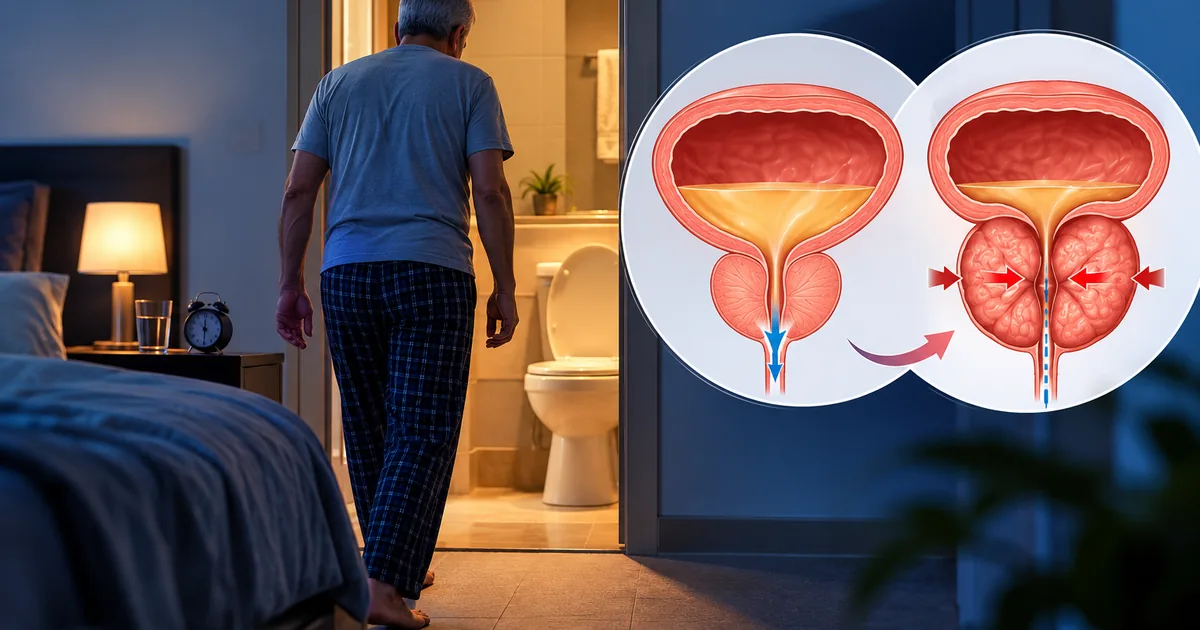
The prostate sits just below the bladder and surrounds the urethra, the tube that carries urine out of the body. When the gland enlarges, it can compress the urethra, making it harder for the bladder to empty completely. Residual urine remains in the bladder, triggering a sense of urgency that often awakens a man during sleep. Additionally, the enlarged prostate can cause the bladder muscle to work harder, leading to over‑activity and more frequent urges.
Enlarged prostate BPH causing frequent nighttime urination in men over 50
Key Signs That Point to BPH
If you’re waking up to pee, look for these accompanying symptoms. The presence of several signs increases the likelihood that BPH is the culprit.
Frequent urination during the day (more than eight times).
Difficulty starting the urine stream or a weak flow.
A sensation of incomplete emptying after you finish.
Dribbling at the end of urination.
Sudden urgency that can lead to accidents.
These symptoms match the early signs of an enlarged prostate outlined by urology experts and are often the first reason men schedule a urology visit.
When Nighttime Urination Is More Than Just BPH
While an enlarged prostate is a leading cause, other conditions can mimic nocturia, including urinary tract infections, diabetes, heart failure, and certain medications. A comprehensive evaluation helps rule out these possibilities.
When to See a Urologist
If you experience two or more of the symptoms listed above, especially if nocturia disrupts your sleep more than once a week, it’s time to schedule an appointment. Early assessment can prevent complications such as bladder stones or kidney damage. Urologists may perform a digital rectal exam, urine tests, and a bladder scan to gauge residual volume.
For a deeper dive into how BPH can affect overall health, read our article on common urology problems.
Managing Nighttime Urination
Several lifestyle tweaks and medical options can reduce nocturia:
Fluid timing: Limit drinks two hours before bedtime, especially caffeine and alcohol.
Bladder training: Practice delaying urination during the day to strengthen bladder capacity.
Medications: Alpha‑blockers relax prostate muscle fibers, while 5‑alpha‑reductase inhibitors shrink the gland over months.
Minimally invasive procedures: Options like transurethral microwave therapy can reduce prostate size without major surgery.
Understanding urine health basics can also help you track patterns and discuss them with your doctor. Our guide on urine healthoffers practical tips for monitoring frequency and volume.
What the Numbers Say About BPH and Nocturia
According to the Urology Group, up to 50% of men by age 60 report BPH‑related symptoms, and nocturia is the most common complaint that drives men to seek care BPH health risks. This prevalence underscores why men over 50 should view nighttime bathroom trips as a signal rather than a normal part of aging.
In summary, waking up to urinate after 50 is often linked to an enlarged prostate, but confirming the diagnosis requires a professional evaluation. Addressing the issue early can improve sleep quality, reduce daytime fatigue, and protect long‑term urinary health.
If you have two or more BPH symptoms, experience sleep disruption, or notice a sudden change in urinary patterns, schedule an appointment with a urologist.
Treatment options range from prescription alpha‑blockers and 5‑alpha‑reductase inhibitors to minimally invasive procedures that shrink or remove excess prostate tissue.
Conclusion
If nighttime trips to the bathroom are becoming a regular part of your routine, don’t ignore them. Schedule a urology consultation to determine whether BPH or another condition is responsible, and explore lifestyle and medical strategies to restore restful sleep.