
Many men wonder, “Why does my bladder not empty completely?” The feeling of a still‑full bladder after urination usually means some urine remains because the bladder cannot contract enough, the urethra is narrowed, or nerves that control voiding are disrupted. Common culprits include an enlarged prostate (BPH), urinary retention, urethral strictures, weak bladder muscles, nerve‑related problems, infections, stones, and certain medicines. Recognizing the pattern of symptoms early helps you and your doctor choose the right tests and treatment.
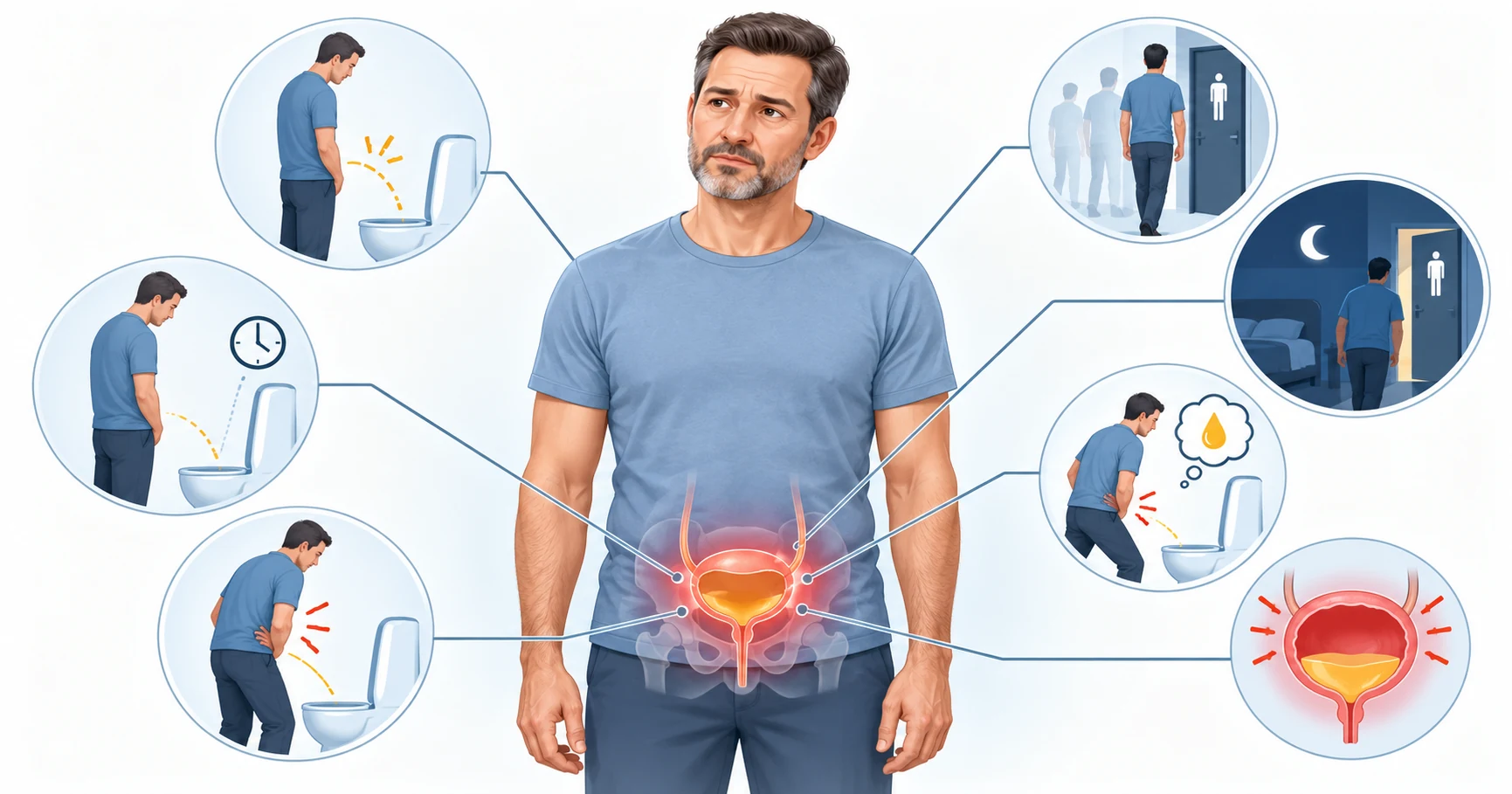
If you experience sudden inability to pass urine together with lower‑abdominal pain, seek urgent medical care – this can be an acute urinary retention that needs immediate attention.
Below are the most frequent reasons men report incomplete bladder emptying.
The prostate surrounds the urethra. As it grows, it can compress the tube and slow urine flow. BPH is the leading cause of bladder outlet obstruction in men over 50. According to clinical research, up to 70% of men develop some degree of BPH by age 70.
Scar tissue from infection, instrumentation, or trauma narrows the urethra, making it harder for urine to exit. Strictures often cause a weak stream and a feeling of incomplete emptying.
The detrusor muscle may lose strength due to age, diabetes, or neurologic disease. When it cannot contract forcefully, urine stays behind.
Conditions such as Parkinson’s disease, multiple sclerosis, spinal injuries, or diabetic neuropathy can disrupt the signals that tell the bladder to contract.
Inflammation irritates the bladder wall and can temporarily impair emptying. UTI studies show that men with prostatitis often report a lingering sense of fullness.
Stones can block the bladder neck or urethra, leading to intermittent obstruction.
Anticholinergics, certain antihistamines, and some antidepressants relax the bladder muscle, reducing its ability to empty fully.
Typical BPH‑related symptoms include a weak stream, nocturia, and a gradual increase in the feeling of incomplete emptying. If these symptoms improve with alpha‑blockers or 5‑alpha‑reductase inhibitors, BPH is probably the main factor. However, if you also have pain, blood in the urine, or a sudden change in symptoms, your doctor should investigate other possibilities such as infection, stones, or a urethral stricture.
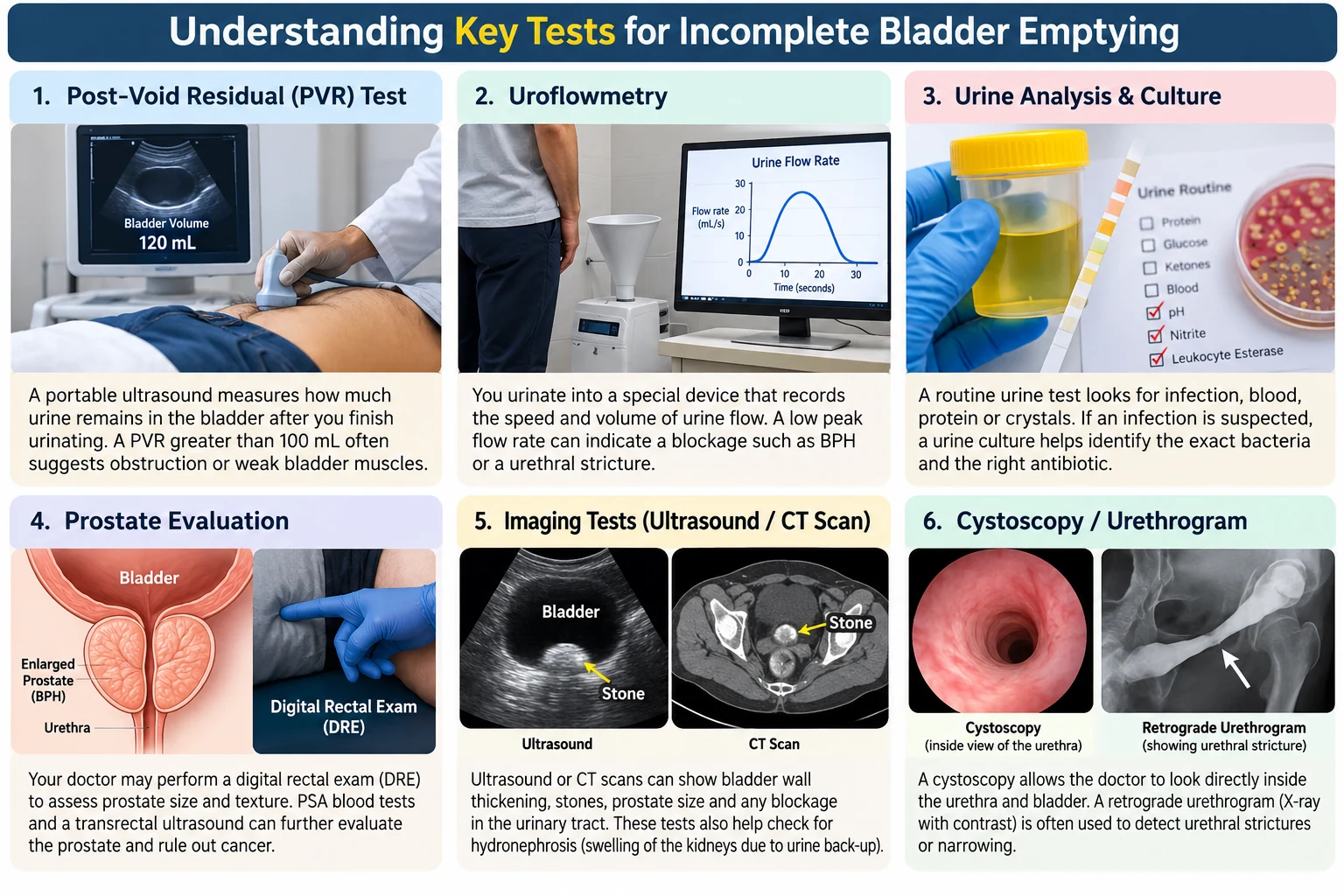
| Symptom | Possible Cause | Diagnostic Test |
|---|---|---|
| Weak or intermittent stream | BPH, urethral stricture | Digital rectal exam (DRE), transrectal ultrasound and uroflowmetry |
| Feeling of urine left after voiding | Detrusor underactivity, obstruction | Post-void residual (PVR) measurement by bladder scan |
| Painful urination or fever | UTI, prostatitis | Urine culture and sensitivity |
| Sudden inability to urinate | Acute urinary retention | Bladder ultrasound to assess retained urine volume |
| Recurrent infections | Kidney stones, bladder stones | CT scan or ultrasound of the kidneys and bladder |
| History of pelvic surgery or trauma | Urethral stricture | Retrograde urethrogram or cystoscopy |
Important: Sudden inability to pass urine, particularly with severe lower-abdominal pain or swelling, requires urgent medical evaluation.
These tests are usually performed in an outpatient urology clinic. For a deeper look at what to expect during a urology visit, see our guide to a urology consultation in Vashi.
Management begins with addressing the underlying reason for incomplete emptying.
For men living in Navi Mumbai or Vashi, our clinic offers comprehensive urology care, including prostate assessment and minimally invasive stone removal. Dr. Prakash Sankapal, a board‑certified urologist, reviews each case to ensure personalized treatment.
Schedule an appointment if you experience any of the following:
Our BPH vs Prostate Cancer guide explains how doctors differentiate benign enlargement from malignancy, which is an essential step during the work‑up.
Incomplete emptying occurs when the bladder muscle can’t contract enough, the urethra is narrowed, or nerves that control urination are disrupted, often due to BPH, strictures, infections, or medication effects.
Yes. An enlarged prostate can compress the urethra, creating a blockage that slows urine flow and leaves residual urine after voiding.
A post‑void residual (PVR) scan uses ultrasound to measure how much urine remains after you finish urinating; values over 100 mL usually indicate a problem.
If untreated, retained urine can increase the risk of urinary tract infections, bladder stones, and, in severe cases, kidney damage due to back‑flow of urine.
Chronic retention can cause hydronephrosis, where urine backs up into the kidneys, potentially impairing kidney function over time.
Staying well‑hydrated, limiting caffeine/alcohol, maintaining a healthy weight, and reviewing medications with your doctor can reduce obstruction and improve bladder muscle function.
If you notice a consistent feeling that your bladder isn’t emptying fully, don’t ignore it. Early evaluation can pinpoint the cause—whether it’s BPH, a stricture, or another issue—and guide effective treatment. Contact our clinic for a personalized assessment and take the first step toward comfortable, complete voiding.
Plot no 70, Moreshwar Heritage, Sector 5, Ulwe, Navi Mumbai, Maharashtra 410206
For Booking: +91 8591009591
Chat With Us
49, Sion – Panvel Hwy, Sector 7, Vashi, Navi Mumbai, Maharashtra 400703
For Booking: +91 8007542142
Chat With Us