+91 8007542142/ +91 8591009591 drprakash13@gmail.com Vashi : 11:00AM TO 02:00PM | Ulwe : 06:00PM TO 09:00PM
What to Bring to a Urology Consultation in Vashi
Walking into a urology clinic for the first time can feel overwhelming, especially if you’re unsure what paperwork or information the doctor needs. In Vashi, top hospitals such as NewEra and Apollo have streamlined the intake process, but the onus is still on you to arrive fully prepared. Bringing the right documents, test results, and a concise symptom diary not only saves time, it helps the urologist pinpoint the cause of your urinary or reproductive concerns faster.
Why Preparation Matters for Your Urology Visit
A well‑organized file gives the specialist a clear picture of your medical history, reducing the need for repeat investigations. According to Visiting a Urology Clinic: What to Expect During Your First Consultation, doctors appreciate a written symptom list and any prior imaging, because it allows them to focus on diagnosis rather than data collection. In Vashi’s busy urology centers, this efficiency can translate into shorter wait times and a more personalized treatment plan.
Essential Documents to Carry
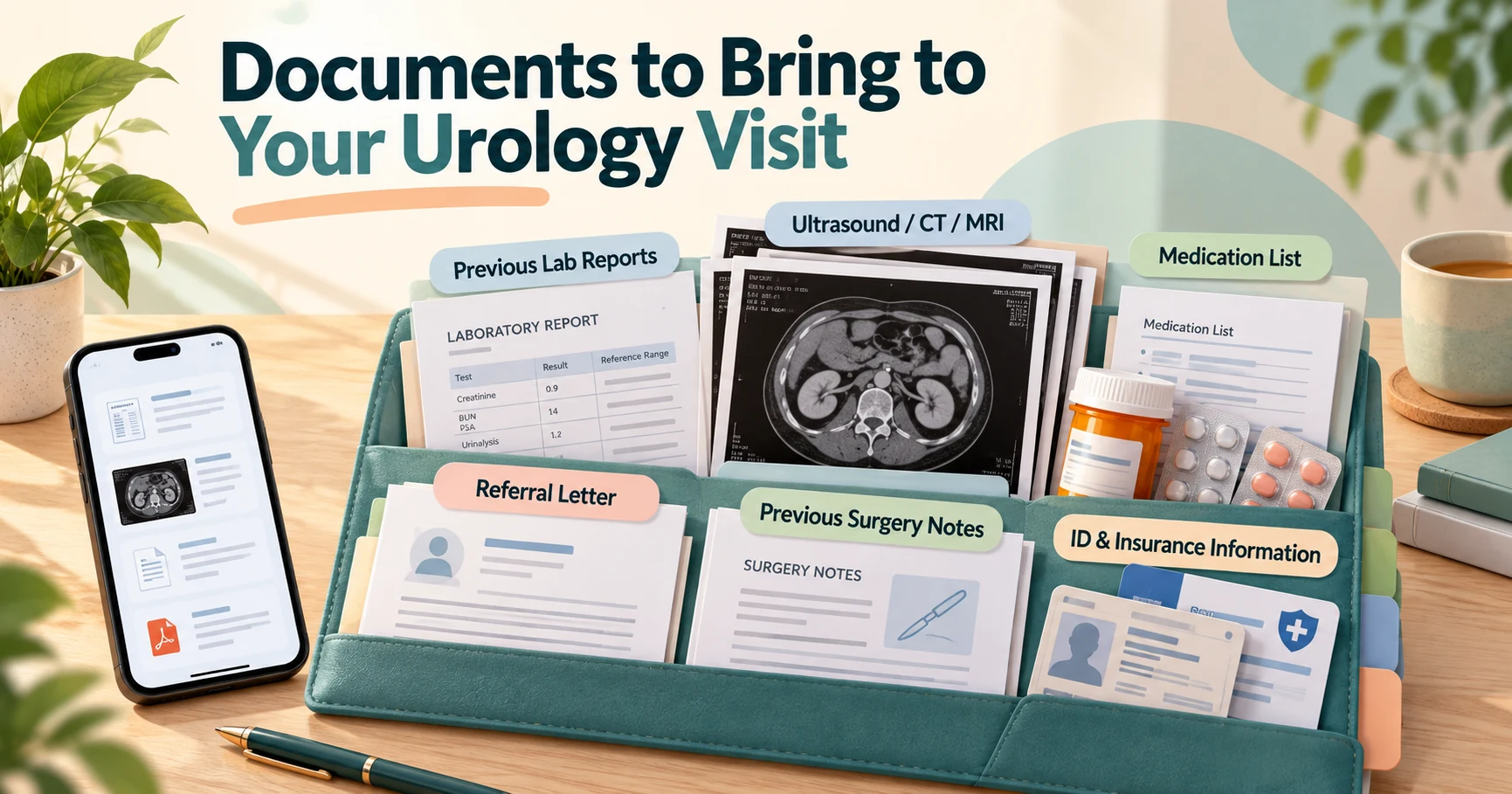
Documents to bring to a urology visit, including lab reports, imaging scans, medication list, referral letter, surgery notes, ID and insurance information.
Before you head to the clinic, gather the following items. Keep them in a single folder or a digital PDF on your phone for easy access.
Previous laboratory reports – blood work (creatinine, electrolytes, PSA) and urine analysis.
Imaging reports – ultrasound, CT KUB, MRI or X‑ray scans of kidneys, bladder, prostate or ureters.
Referral letters – from your primary physician or any specialist who previously evaluated you.
Medication list – include over‑the‑counter drugs, supplements and any recent changes.
Vaccination records – especially if you may need a procedure that requires pre‑operative clearance.
Insurance card and photo ID – for billing and verification.
Previous surgical notes – if you have undergone procedures such as stone removal, prostate surgery or vasectomy.
Even if you bring past results, the doctor may request fresh investigations to capture the current state of your urinary system. Typical tests include:
Urine analysis (UA) – checks for infection, blood, crystals or protein.
Blood tests – renal function panel, complete blood count, and prostate‑specific antigen (PSA) for men.
Ultrasound of kidneys and bladder – non‑invasive way to view stones, obstruction or bladder wall thickness.
CT KUB (Kidney‑Ureter‑Bladder) – detailed cross‑sectional imaging, often ordered when stones are suspected.
MRI – used for complex cases such as suspected tumors or pelvic floor dysfunction.
Uroflowmetry – measures the speed and volume of urine flow to assess obstruction.
Cystoscopy – a thin camera is inserted into the bladder to directly visualise lesions or strictures.
These investigations are standard across Vashi’s leading urology departments, including those at MGM New Bombay HospitalUrology Services in Vashi and Mayur Hospital Uro Surgery in Vashi, Navi Mumbai.
How to Record Your Symptoms Effectively
Doctors rely heavily on your description of symptoms because many urinary disorders are diagnosed clinically. Use a notebook or a phone app to note the following details over at least three days before your appointment:
Time of day you first feel the urge to urinate.
Number of voids during daylight and nighttime (nocturia).
Volume of each void (if you can estimate).
Any pain, burning, or pressure and its exact location.
Triggers such as caffeine, alcohol, or physical activity.
Associated symptoms – fever, flank pain, blood in urine, or erectile issues.
Having a concise symptom log mirrors the recommendation in Visiting a Urology Clinic and makes it easier for the urologist to match your experience with specific conditions.
Key Questions to Ask Your Urologist
Even the most seasoned patients forget to ask critical questions during a busy consultation. Prepare a short list and keep it handy. Here are eight essential queries:
What is the most likely diagnosis based on my symptoms and test results?
Do I need any additional tests, and why?
What are the treatment options – medication, minimally invasive procedures, or surgery?
What are the risks and benefits of each option?
How long will recovery take, and what activity restrictions will I face?
Will my condition affect fertility or sexual function?
What lifestyle changes can help prevent recurrence?
When should I schedule a follow‑up, and what signs warrant an urgent visit?
Writing these questions down ensures you don’t leave the clinic with unanswered doubts, a practice endorsed by patient‑education resources across the region.
Tips for a Smooth Appointment Day
Finally, a few practical pointers can make the day less stressful:
Arrive 10‑15 minutes early to complete registration forms.
Bring a full‑size water bottle – some tests require a half‑full bladder.
Wear comfortable clothing that’s easy to remove if a physical exam is needed.
Consider bringing a trusted family member or friend to help recall information.
Turn off mobile notifications to stay focused during the discussion.
Patient preparing for a urology consultation in Vashi with medical reports, imaging scans, medication list, symptom notes, surgery records and questions for the doctor.
Fasting is usually not required for a standard urine analysis, but some blood tests like renal function panels may ask you to fast for 8‑12 hours. Check the lab instructions you receive.
A first‑time visit generally lasts 30‑45 minutes, allowing time for history taking, review of documents, a physical exam, and discussion of any immediate tests.
Yes, most clinics in Vashi provide printed or digital copies of your results within a few days, and many also upload them to patient portals for easy access.
While not mandatory, a companion can help you remember details, ask additional questions, and provide emotional support, especially if you’re undergoing a complex evaluation.
Seek immediate medical attention at the nearest emergency department; severe flank pain or sudden inability to urinate can indicate an urgent condition like a blocked kidney stone.
Conclusion
Being prepared with the right reports, a clear symptom diary, and thoughtful questions empowers you and your urologist to reach an accurate diagnosis quickly. Schedule your appointment, gather the checklist above, and take charge of your urinary health today.