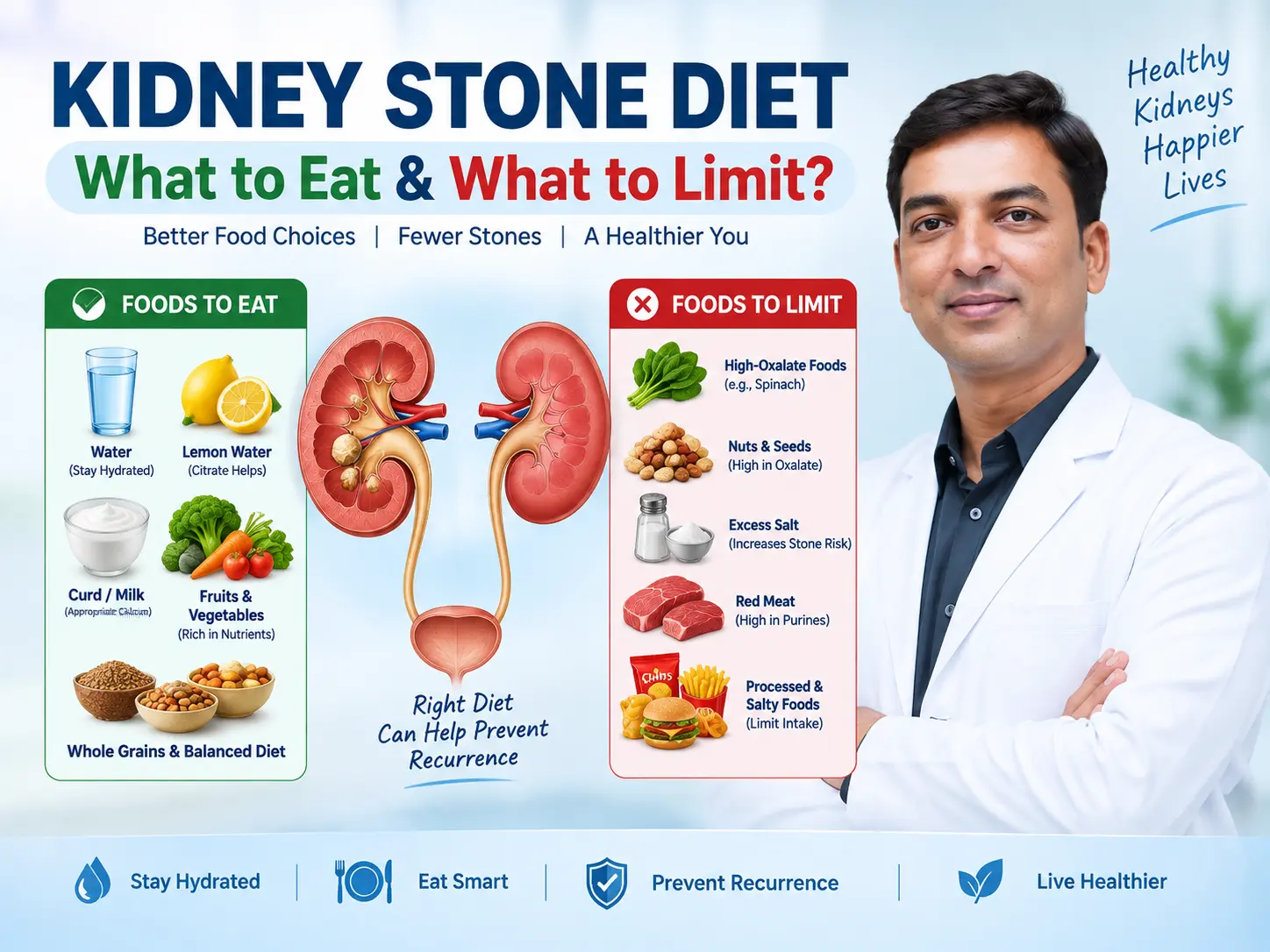
A good kidney stone diet usually focuses on drinking enough water, limiting excess salt, eating an appropriate amount of calcium from food, moderating animal protein, and adjusting oxalate or purine intake when your stone type requires it. However, the right diet is not the same for every patient. Calcium oxalate, uric acid, calcium phosphate and cystine stones can require different dietary strategies.
If you have already had a kidney stone, identifying the stone type and your individual urinary risk factors can make prevention more precise. Patients with repeated stones may benefit from stone analysis and metabolic evaluation rather than simply following a generic “foods to avoid” list.
What Is a Kidney Stone Diet?
A kidney stone diet is an eating and hydration plan designed to reduce the conditions that allow crystals to form in urine. It does not necessarily mean avoiding large groups of foods.
Current guidance emphasizes a balanced diet, adequate fluids, normal dietary calcium, less salt, and avoiding excessive animal protein, while more specific restrictions should be based on stone composition and metabolic findings.
If you already have stones, you can also learn about kidney and ureteric stone treatment.
Does the Right Diet Depend on the Type of Kidney Stone?
Yes. The right kidney stone diet depends significantly on the type of stone you form.
| Stone Type | Dietary Focus That May Be Considered |
|---|---|
| Calcium oxalate | Adequate fluids, normal dietary calcium, lower sodium and targeted oxalate reduction |
| Calcium phosphate | Hydration, sodium reduction and individualized metabolic evaluation |
| Uric acid | Hydration and moderation of purine-rich/animal-protein foods |
| Cystine | High fluid intake is especially important; specialist management is usually needed |
| Infection-related stones | Diet alone does not address the underlying problem; infection and stone management are important |
This is why copying another person’s kidney stone diet may not produce the same result for you.
What Should You Eat After Having a Kidney Stone?
For many stone formers, the goal is not a highly restrictive diet. It is a balanced eating pattern that keeps urine adequately diluted and avoids excessive amounts of nutrients that may increase stone risk.
Meals can generally emphasize vegetables, fruits, whole grains and appropriate protein sources, while your calcium, oxalate and protein choices can be adjusted according to your stone type.
For an Indian diet, a practical meal might include roti or rice in an appropriate portion, dal or another suitable protein source, vegetables, curd or another food-based calcium source if appropriate, and water throughout the day. However, some plant foods may themselves contain significant oxalate, so patients with confirmed calcium oxalate stones should receive individualized advice rather than assuming every plant food is automatically suitable.
How Much Water Should You Drink for Kidney Stone Prevention?
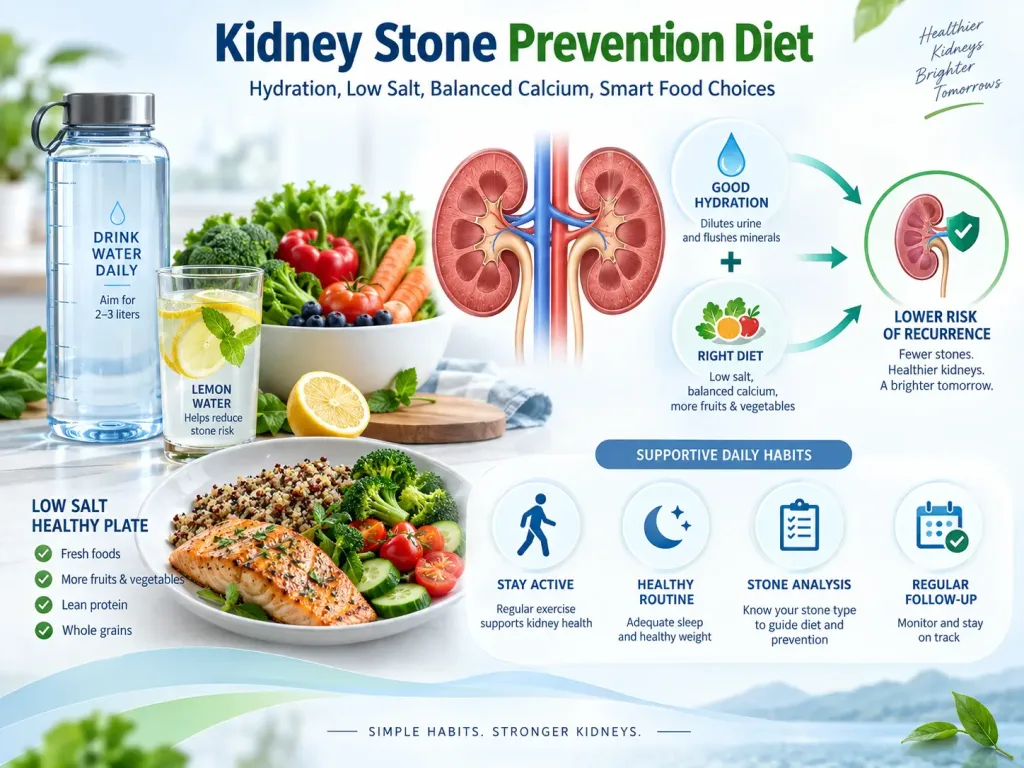
Hydration is one of the most important parts of kidney stone prevention.
European urolithiasis guidance recommends, for many adult stone formers, approximately 2.5–3 litres of fluid per day, aiming for about 2–2.5 litres of urine output daily, with water as the preferred drink. The exact amount should be individualized.
People with heart disease, kidney failure, significant swelling, or another condition requiring fluid restriction should not increase fluid intake without medical advice.
A practical habit is to drink regularly through the day instead of consuming most of your water at one time. Extra attention may be needed during hot Navi Mumbai weather, exercise, heavy sweating or outdoor work.
Should You Stop Eating Calcium if You Have Calcium Stones?
No. This is one of the most common kidney stone diet mistakes.
Having a calcium-containing kidney stone does not automatically mean you should stop eating calcium. Normal dietary calcium can bind oxalate in the digestive tract, reducing the amount available for absorption. Current European guidance generally supports a normal dietary calcium intake rather than routine calcium restriction.
Food sources may include milk, curd/yogurt or other suitable calcium-rich foods depending on your overall diet and medical condition.
Calcium supplements are different from calcium naturally present in food and should not be started simply for stone prevention without discussing them with your doctor.
Which Foods Should Be Limited for Calcium Oxalate Stones?
People with confirmed calcium oxalate stones may be advised to reduce excessive intake of particular high-oxalate foods.
Examples commonly identified as higher in oxalate include spinach, rhubarb, beets, some nuts, chocolate and certain teas. However, not everyone who has had a kidney stone needs a strict low-oxalate diet.
Another useful strategy is consuming an appropriate calcium-containing food with the meal containing oxalate, which can promote calcium-oxalate binding in the gut rather than the urinary tract.
The goal is targeted moderation—not blindly eliminating vegetables or other nutritious foods.
Why Should You Reduce Salt?
High salt intake can increase urinary calcium excretion in susceptible patients, potentially contributing to calcium stone formation.
European guidance recommends limiting salt and notes that high sodium intake can adversely affect urine chemistry.
For Indian diets, hidden salt may come not only from the salt added while cooking but also from packaged namkeen, chips, pickles, papad, sauces, instant foods and restaurant meals.
Reducing these sources may be more useful than focusing only on the salt shaker.
Should You Limit Meat and Animal Protein?
Large amounts of animal protein can affect urine chemistry and may increase risk for certain kidney stones, particularly uric acid stones and some calcium stone patterns.
You may not need to become vegetarian. The aim is usually appropriate portion size and avoiding excessive intake of meat, organ meats and other high-purine foods when clinically relevant.
Some meals can include suitable plant proteins such as dal, beans or lentils, but stone-specific advice is still important because certain foods can also contribute oxalate or other nutrients that matter to an individual patient.
Are Lemon Water and Citrus Fruits Helpful?
Citrus foods and drinks can provide citrate, a natural substance that may help inhibit some forms of stone formation.
European guidance notes that citrus fruit juices may influence urinary citrate and urine pH, although water should remain the preferred fluid.
Plain lemon water without excessive sugar can be reasonable for some patients, but it should not be treated as a cure or a replacement for medical evaluation.
What Drinks Should You Limit?
Water should make up most of your fluid intake.
Frequent sugar-sweetened drinks and calorie-heavy beverages are generally not ideal substitutes for water. European guideline evidence also supports reducing soft drink intake as part of broader stone-prevention strategies.
If you drink packaged juices, energy drinks or sweetened beverages regularly, replacing some of them with water is usually a more practical long-term strategy.
Can Supplements Increase Kidney Stone Risk?
Some vitamins and supplements can alter stone risk in certain people.
The National Kidney Foundation recommends discussing supplements such as vitamin C, vitamin D, calcium and mineral supplements with your healthcare team rather than assuming they are harmless because they are available without a prescription.
This is particularly important if you have recurrent stones or abnormal blood/urine test results.
How Do You Know Which Kidney Stone Diet Is Right for You?
The most useful diet plan starts by understanding why your stones formed.
A urologist may consider your previous stone composition, imaging, blood tests, urine testing, dietary habits and history of recurrent stones. Selected recurrent or high-risk patients may also require metabolic evaluation.
This approach is more precise than simply telling every stone patient to “avoid calcium” or “stop eating spinach.”
What If a Kidney Stone Is Already Present?
Diet can help with long-term prevention, but it cannot guarantee that an existing stone will dissolve or pass.
Treatment depends on the stone’s size, location, symptoms, obstruction, infection and other clinical factors. Dr. Prakash Sankapal’s kidney stone service includes assessment and minimally invasive options where appropriate.
Selected stones may be managed with RIRS laser treatment for kidney stones, while other patients may need observation or another treatment approach depending on their condition.
Expert Kidney Stone Care in Navi Mumbai

Dr. Prakash Sankapal is a Consultant Urologist and Kidney Transplant Surgeon with more than 13 years of urology experience listed on his website, including experience in kidney stone management with PCNL, Mini-PCNL, Laser Mini-PCNL and RIRS.
Patients looking for a urologist in Navi Mumbai or Vashi for kidney stones can consult Dr. Prakash Sankapal at NewEra Hospitals, Vashi, or JP Kidney Care, Ulwe. Current location and appointment information is available on the contact page.
Frequently Asked Questions
What should I eat after having a kidney stone?
A balanced diet with adequate water, appropriate food-based calcium, vegetables, fruits and suitable protein is commonly recommended. More specific changes depend on your stone type and test results.
Does the right diet depend on the type of kidney stone?
Yes. Calcium oxalate, uric acid, calcium phosphate and cystine stones may require different dietary strategies.
Is a low-salt diet helpful for kidney stones?
Reducing excessive salt is particularly relevant for many calcium stone formers because high sodium intake can affect urinary calcium.
Can diet dissolve an existing kidney stone?
Not all stones can be dissolved by diet. Some uric acid stones may respond to medically supervised urine alkalinisation, but many other stones require observation or procedural treatment depending on their size and location.
When should I see a urologist for kidney stones?
Seek medical assessment for severe or recurring pain, fever, urinary blockage, blood in the urine, repeated stones or uncertainty about your stone type and prevention plan.
Conclusion
A good kidney stone diet is not simply a list of foods to avoid. For most patients, the foundation is adequate hydration, lower salt intake, appropriate dietary calcium, balanced protein intake and avoiding unnecessary extreme restrictions. The next step is to adjust the diet according to stone type and metabolic risk factors.
If you have recurrent stones or are unsure what you should eat after a kidney stone, consultation with a urologist in Navi Mumbai or Vashi can help identify your stone type and create a more individualized prevention strategy.
CTA
For kidney stone evaluation, prevention advice or treatment, consult Dr. Prakash Sankapal at NewEra Hospitals, Vashi, Navi Mumbai or JP Kidney Care, Ulwe.