
Kidney stone pain commonly starts in the side or back below the ribs and can spread toward the lower abdomen or groin as the stone moves through the urinary tract. The pain may be sharp, severe, come in waves, and change location. Some people also experience nausea, vomiting, blood in the urine, burning while urinating, or frequent urination.
While some small kidney stones may pass without a procedure, severe pain or symptoms such as fever, chills, difficulty passing urine, or persistent vomiting require prompt medical evaluation. Knowing the kidney stone pain location and associated warning signs can help you decide when to seek urological care.
What Is Kidney Stone Pain?
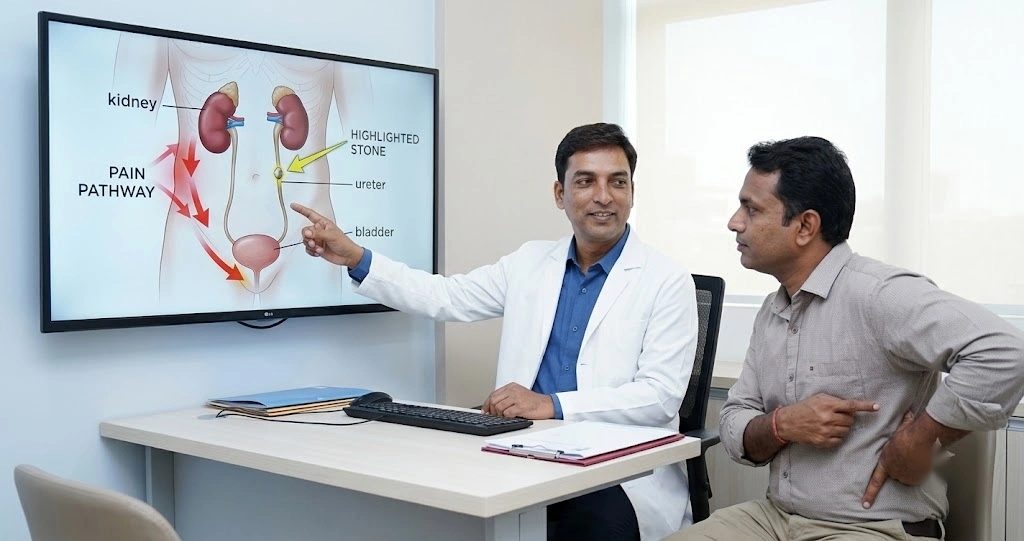
Kidney stones are hard deposits that form inside one or both kidneys from substances present in urine. A stone may remain inside the kidney without causing symptoms, but pain often begins when it moves into the ureter, the narrow tube connecting the kidney to the bladder.
When a stone becomes lodged in the ureter, it can interfere with normal urine flow and trigger spasms of the ureter. This can produce intense pain, often referred to as renal colic. Patients who want to understand their condition in detail can read more about kidney and ureteric stone treatment.
Where Is Kidney Stone Pain Usually Felt?
A common patient question is: Where does kidney stone pain start and spread?
Kidney stone pain most often begins in the flank or side of the back, just below the ribs. As the stone travels down the ureter, the pain can move toward the lower abdomen, groin, or pelvic area. The exact location may change depending on where the stone is positioned.
Kidney Stone Pain Location Guide
| Stone Location | Common Area of Pain |
|---|---|
| Inside the kidney | Side or back below the ribs |
| Upper ureter | Flank or upper abdomen |
| Middle ureter | Side or lower abdomen |
| Lower ureter | Lower abdomen or groin |
| Near the bladder | Pelvic discomfort, urinary urgency |
Pain location can provide useful clues, but it cannot confirm the exact position or size of a kidney stone. Imaging may be needed for an accurate diagnosis.
Why Does Kidney Stone Pain Come in Waves?
Kidney stone pain often behaves differently from ordinary muscle pain. It may suddenly become very intense, improve for a short period, and then return. This wave-like pattern can happen as the ureter contracts while attempting to move the stone toward the bladder.
The pain may also change position over time. For example, it can begin near the back or side and later move toward the lower abdomen or groin as the stone travels through the urinary tract. NIDDK notes that kidney stone pain may last for a short or long time and may come and go in waves.
How Is Kidney Stone Pain Different From Back Pain?
Kidney stone pain and ordinary back pain can sometimes be confused because both may affect the back or side. However, kidney stone pain is often deeper, more intense, and may radiate toward the lower abdomen or groin.
Muscular back pain is usually more closely related to movement, posture, lifting, or pressure on a particular muscle. Kidney stone pain may occur along with urinary symptoms such as blood in the urine, burning during urination, frequent urination, nausea, or vomiting. Kidney-related pain itself can also have causes other than stones, so diagnosis should not be based on pain location alone.
What Other Symptoms Can Occur With Kidney Stones?
Kidney stones can cause more than pain. Symptoms vary depending on the stone’s size, location, movement, and whether it is blocking urine flow.
Common kidney stone symptoms may include:
- – Blood in the urine
- – Burning or discomfort while urinating
- – Frequent urge to urinate
- – Passing only small amounts of urine
- – Cloudy or unusual-smelling urine
- – Nausea or vomiting
- – Fever or chills
Some small stones may cause few or no symptoms, while a relatively small stone moving through the ureter can still produce significant pain.
When Should You Seek Medical Care for Kidney Stone Pain?
Not every episode of mild discomfort is an emergency, but certain symptoms should not be ignored.
Seek prompt medical attention if kidney stone pain is extremely severe, especially if you cannot sit comfortably or find a position that reduces the pain. You should also seek care if pain occurs with fever and chills, persistent nausea or vomiting, blood in the urine, or difficulty passing urine.
Fever or chills alongside suspected urinary obstruction may indicate an infection and requires timely assessment. Repeated attacks of pain should also be evaluated even if symptoms temporarily improve.
How Are Kidney Stones Diagnosed?
A urologist will usually begin by asking about the location and nature of the pain, urinary symptoms, previous kidney stones, medical history, medications, and other relevant factors.
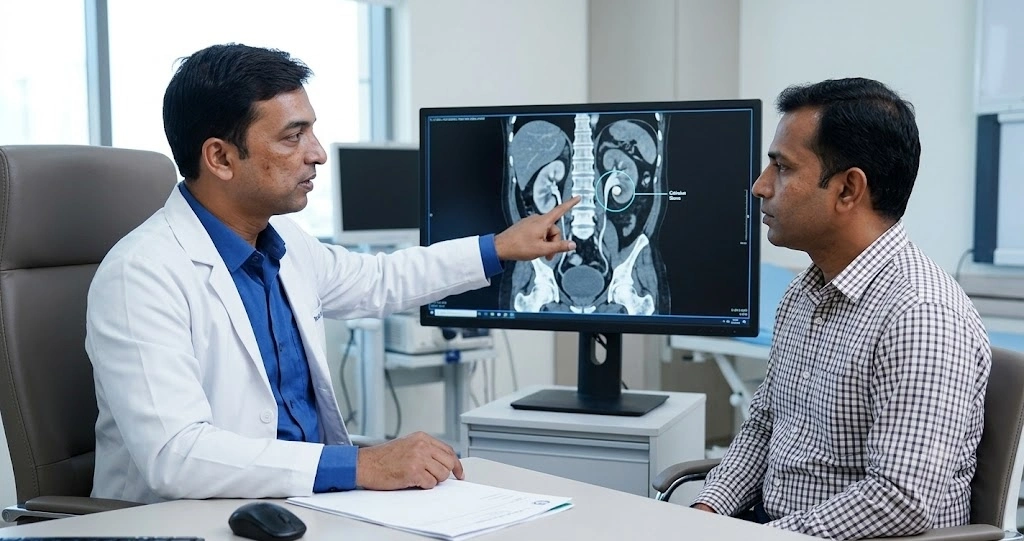
Depending on the symptoms, evaluation may include urine tests, blood tests, ultrasound, CT imaging, or other investigations. Imaging is particularly useful for identifying the size, number and location of stones and determining whether urine flow is being obstructed. NIDDK notes that medical history, physical examination, and diagnostic tests are used to diagnose kidney stones.
Do All Kidney Stones Require Surgery?
No. Having kidney stone pain does not automatically mean that surgery is required.
Some smaller stones can pass naturally through the urinary tract. Treatment depends on factors such as the stone’s size, location, symptoms, infection, blockage, kidney function, and the likelihood of the stone passing without intervention.
When a stone is unlikely to pass naturally or is causing significant symptoms or obstruction, a urologist may recommend an appropriate procedure. Options vary according to the individual case.
One minimally invasive option for suitable kidney stones is RIRS laser treatment for kidney stones, which uses a flexible scope and laser to access and fragment selected stones through the urinary passage.
What Factors Affect Kidney Stone Treatment?
The best treatment is not determined by pain severity alone. Two people with similar pain may require different treatment depending on their scan results and overall condition.
Important factors include the stone’s:
- – Size
- – Location
- – Number
- – Effect on urine flow
- – Associated infection
- – Likelihood of passing naturally
The patient’s kidney function, symptoms, previous stone history, and overall health are also considered before a treatment plan is recommended.
Can Kidney Stones Come Back?
Yes. Kidney stones can recur after a previous episode or treatment. Prevention therefore becomes an important part of long-term care.
Depending on the type of stone and the person’s medical history, a urologist may recommend appropriate fluid intake, dietary changes, laboratory testing, stone analysis, or other preventive measures. Dr. Prakash Sankapal’s kidney stone information also notes that preventive advice may be recommended according to the type of stone.
Expert Insight: Kidney Stone Care in Navi Mumbai
Dr. Prakash Sankapal is a Consultant Urologist and Kidney Transplant Surgeon with qualifications including MBBS, MS (Surgery), MCh (Urology), and DNB (Genitourinary Surgery). His website states that he has more than 13 years of experience in urology and manages kidney stones using procedures including PCNL, Mini-PCNL, Laser Mini-PCNL, and RIRS.
Patients looking for evaluation of kidney stone pain in Navi Mumbai or Vashi can consult Dr. Prakash Sankapal at NewEra Hospitals, Vashi, or JP Kidney Care, Ulwe. Current appointment locations and timings are available through the contact and appointment page.
Frequently Asked Questions
Where does kidney stone pain usually start?
Kidney stone pain commonly starts in the side or back below the ribs and may later move toward the lower abdomen or groin.
Can kidney stone pain move from the back to the groin?
Yes. Pain can move as the stone travels from the kidney through the ureter toward the bladder.
Does kidney stone pain come and go?
Yes. Kidney stone pain may occur in waves, with periods of severe pain followed by temporary improvement.
Do all kidney stones need surgery?
No. Some smaller stones may pass naturally. Surgery or another procedure may be considered depending on stone size, location, symptoms, blockage, and infection.
Where can I consult for kidney stone pain in Navi Mumbai?
Dr. Prakash Sankapal provides urology consultations at NewEra Hospitals, Vashi and JP Kidney Care, Ulwe, Navi Mumbai.
Conclusion
Kidney stone pain commonly begins in the side or back below the ribs and may spread toward the lower abdomen or groin as the stone moves through the urinary tract. Although some stones may pass naturally, severe pain or symptoms such as fever, chills, vomiting, blood in the urine, or difficulty urinating should not be ignored. If you are experiencing recurring or severe kidney stone symptoms in Navi Mumbai or Vashi, a urological evaluation can help identify the stone’s size and location and determine the most suitable treatment.