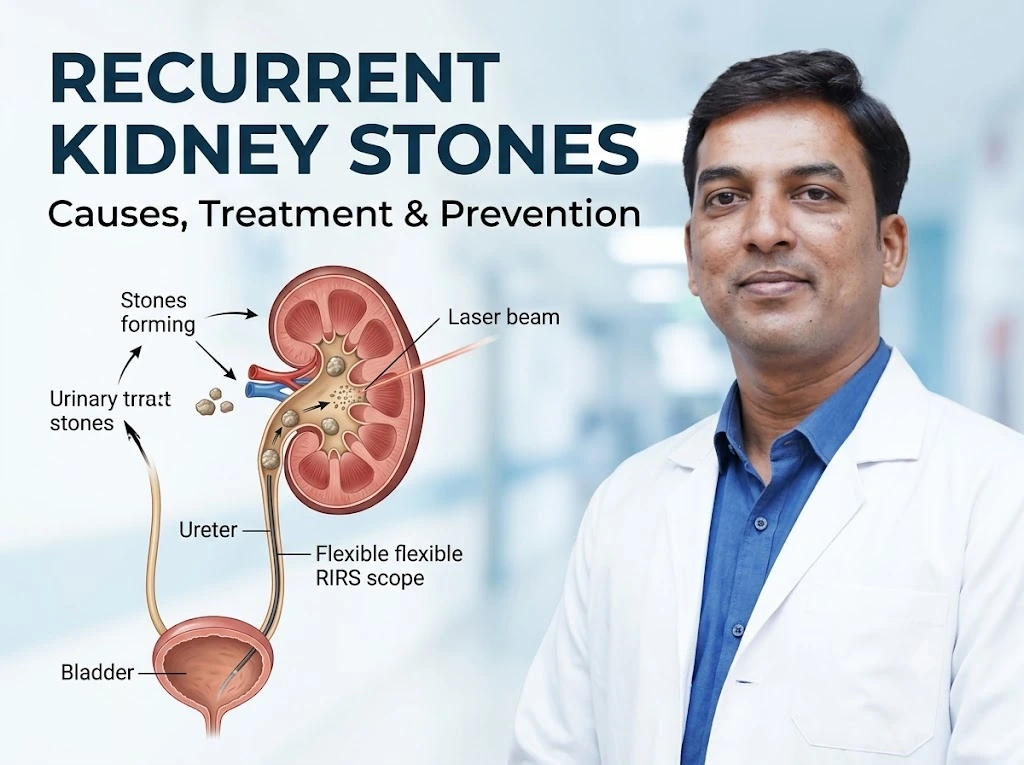
Kidney stones can come back when the underlying conditions that allowed the first stone to form are still present. Low urine volume, excess urinary calcium or uric acid, low citrate, dietary factors, certain medical conditions, infection, genetics, and some medications can all contribute to recurrent kidney stones.
For people who repeatedly develop stones, simply removing the current stone may not be enough. Identifying the type of stone and the reason it formed can help create a more personalized prevention plan and potentially reduce future episodes. European guidelines recommend basic metabolic evaluation and stone analysis for stone formers, with more detailed metabolic testing for people at higher risk of recurrence.
What Are Recurrent Kidney Stones?
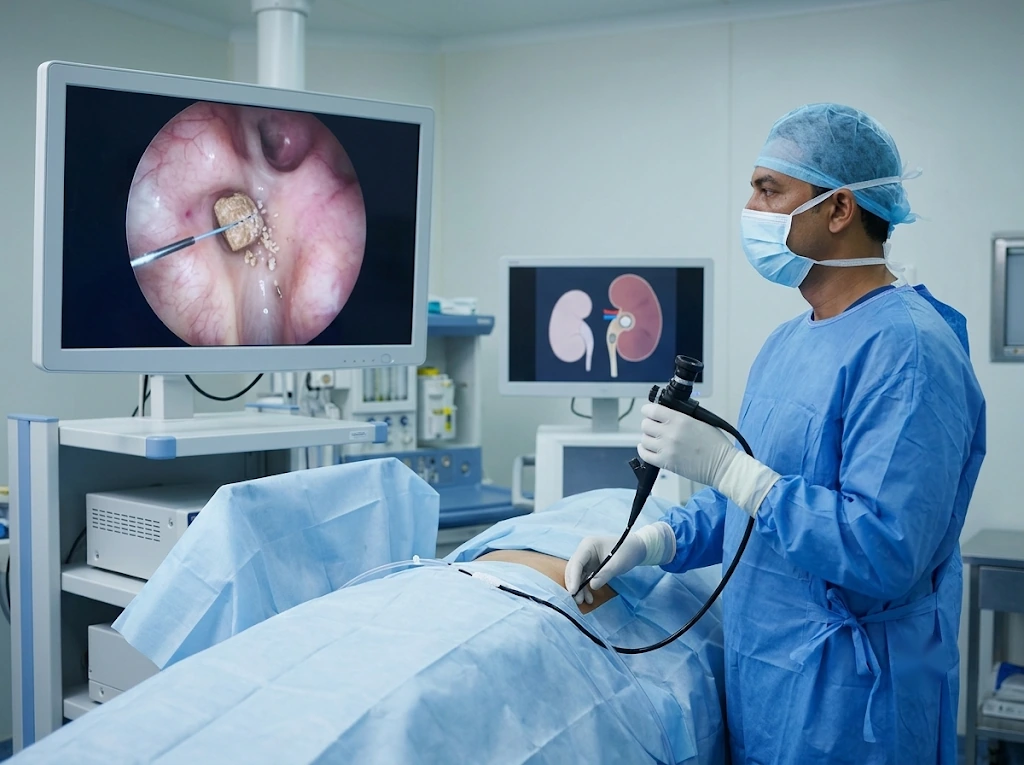
Recurrent kidney stones means that a person develops a new kidney or ureteric stone after having one previously. Some patients may experience another stone after several years, while others develop stones much more frequently.
Stones form when certain substances in urine become concentrated enough to crystallize. Understanding the original stone type is important because calcium oxalate, calcium phosphate, uric acid, infection-related and cystine stones may have different causes and prevention strategies. Patients can learn more about kidney and ureteric stone treatment.
Why Do Kidney Stones Keep Coming Back?
There is usually no single reason for repeated kidney stones. Recurrence often results from a combination of urine chemistry, diet, hydration, medical conditions and genetic risk.
| Possible Cause | How It May Contribute |
|---|---|
| Low fluid intake | Produces concentrated urine in which crystals form more easily |
| High sodium intake | May increase urinary calcium in susceptible stone formers |
| Excess animal protein | Can influence uric acid and urine chemistry |
| High urinary calcium | Can promote calcium-based stones |
| Low urinary citrate | Reduces a natural inhibitor of stone formation |
| High urinary uric acid | May contribute to uric acid or calcium stones |
| Recurrent urinary infection | Certain bacteria can contribute to infection stones |
| Family or genetic factors | Some people have an inherited tendency to form stones |
| Certain medical conditions | Gout, hyperparathyroidism and some metabolic disorders may increase risk |
The European Association of Urology notes that metabolic abnormalities such as high urinary calcium, high oxalate, high uric acid and low citrate may be identified in calcium stone formers.
Can Dehydration Cause Repeated Kidney Stones?
Yes. Low urine volume is one of the most important modifiable factors in kidney stone recurrence. When a person does not drink enough, especially during hot weather, exercise or heavy sweating, the urine becomes more concentrated.
European guidance advises generous fluid intake, preferably water, with the general goal of producing more than about 2.5 litres of urine per day for stone prevention. However, the correct fluid target should be individualized, particularly for people with kidney, heart or other medical conditions.
Does Diet Cause Recurrent Kidney Stones?
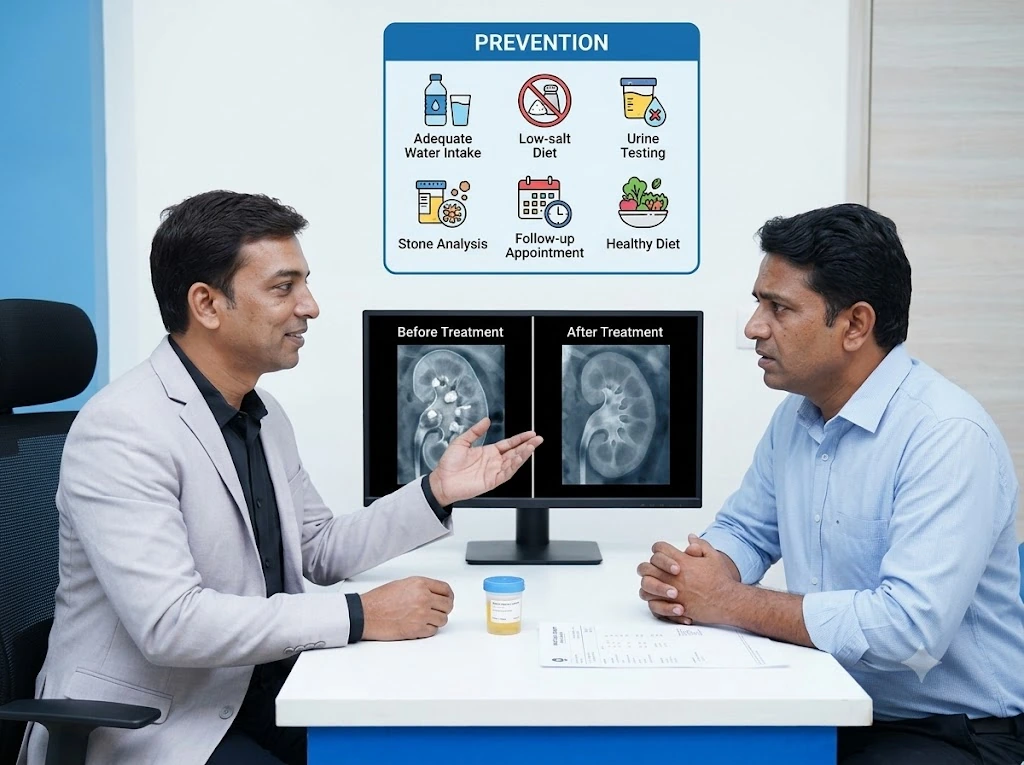
Diet can influence recurrence, but prevention should not simply mean avoiding every food associated with kidney stones. The appropriate diet depends partly on the person’s stone type and urine chemistry.
NIDDK advises that people who have formed stones may need changes in sodium, animal protein, calcium or oxalate intake depending on the type of stone. Importantly, patients should not automatically eliminate dietary calcium. Adequate calcium from food can actually help reduce intestinal oxalate absorption in appropriate patients.
What Tests Are Needed for Recurrent Kidney Stones?
When kidney stones repeatedly return, the goal of testing changes from simply finding the stone to asking: Why is this patient forming stones?
A recurrent stone evaluation may include:
- – Analysis of a passed or surgically removed stone
- – Blood tests for kidney function, calcium, uric acid and other relevant markers
- – Urine testing for infection, blood and urine pH
- – Ultrasound or CT imaging when appropriate
- – Metabolic evaluation
- – 24-hour urine testing in selected recurrent or high-risk stone formers
For specific metabolic evaluation, current EAU guidance recommends two consecutive 24-hour urine collections. These can assess factors such as urine volume, calcium, oxalate, uric acid, citrate, sodium and urine pH.
What Can a 24-Hour Urine Test Show?
A 24-hour urine test provides information that cannot be obtained simply by looking at a stone on an ultrasound.
For example, it may reveal low urine volume, excess calcium, excess oxalate, excess uric acid, low citrate or abnormal urine acidity. The findings can then help a urologist decide whether dietary changes alone are appropriate or whether additional treatment should be considered.
Does the Type of Kidney Stone Affect Prevention?
Yes. This is one of the most important reasons stone analysis is useful.
Calcium oxalate stones may require attention to fluid intake, sodium, oxalate and urinary calcium or citrate. Uric acid stones are often associated with acidic urine and may require different dietary or medical strategies. Infection stones require attention to urinary infection, while cystine stones are associated with an inherited condition and have their own preventive approach.
A single generic “kidney stone diet” is therefore not suitable for every recurrent stone former.
Simple Daily Prevention Checklist
| Habit | Why It Matters |
|---|---|
| Drink fluids regularly | Helps keep urine diluted |
| Avoid excessive salt | May reduce urinary calcium load |
| Maintain balanced dietary calcium | May help control oxalate absorption |
| Avoid excessive animal protein | Helps control some urinary risk factors |
| Stay active and maintain healthy weight | Supports overall metabolic health |
| Complete follow-up tests | Helps detect persistent risk factors |
| Take prescribed preventive medication | Useful for selected metabolic abnormalities |
Do not start supplements or dramatically restrict calcium or other nutrients solely because you have had a kidney stone. Prevention should be individualized.
Can Kidney Stones Return Even After Surgery?
Yes. Surgery removes existing stones but does not necessarily eliminate the biological or metabolic reason stones developed.
Another issue is that small residual stone fragments can sometimes remain after treatment and later enlarge. Follow-up imaging may therefore be recommended depending on the original stone burden, procedure and clinical situation.
If another stone requires treatment, the procedure selected depends on its size, location, anatomy, symptoms and other factors. Selected patients may be suitable for RIRS laser treatment for kidney stones.
Do Recurrent Kidney Stones Always Require Surgery?
No. Recurrent stones do not automatically mean repeated surgery.
Small, uncomplicated stones may sometimes be monitored or pass naturally, while stones causing persistent obstruction, significant symptoms, infection or other complications may require intervention. Treatment decisions should be based on imaging and clinical findings rather than recurrence alone.
Why Is Preventing Recurrent Kidney Stones Important?
Repeated stone episodes can mean repeated pain, emergency visits, urinary obstruction, procedures and disruption to normal life. Some stones may also occur alongside urinary infections or impaired drainage.
Prevention therefore focuses on more than simply avoiding pain. The aim is to understand the patient’s individual stone-forming pattern and manage modifiable risks before another clinically significant stone develops.
What Affects the Cost of Recurrent Kidney Stone Evaluation?
There is no single fixed cost because recurrent kidney stone care differs considerably between patients.
Cost may depend on laboratory investigations, stone analysis, ultrasound or CT imaging, 24-hour urine evaluation, medicines, follow-up visits and whether a procedure is required. A patient who only needs metabolic evaluation will have a very different treatment pathway from someone with a large obstructing stone requiring surgery.
Expert Kidney Stone Evaluation in Navi Mumbai
Dr. Prakash Sankapal is an MBBS, MS (Surgery), MCh (Urology) and DNB (Genitourinary Surgery) qualified Consultant Urologist and Kidney Transplant Surgeon. His website states that he has more than 13 years of experience in urology and expertise in kidney stone procedures including PCNL, Mini-PCNL, Laser Mini-PCNL and RIRS.
For patients looking for a urologist in Navi Mumbai or Vashi for repeated kidney stones, Dr. Prakash Sankapal consults at NewEra Hospitals, Vashi, Navi Mumbai, and JP Kidney Care, Ulwe. Current location, timing and appointment information is available through the appointment and contact page.
Frequently Asked Questions
Why do I keep getting kidney stones again?
Repeated stones may occur because of concentrated urine, metabolic abnormalities, diet, genetics, infection or certain medical conditions. Testing can help identify the most likely cause.
How can I find out what is causing my recurrent kidney stones?
Stone analysis, blood tests, urine tests and, in selected recurrent or high-risk patients, a 24-hour urine metabolic evaluation may help identify contributing factors.
Can kidney stones return after RIRS?
Yes. RIRS can treat existing stones, but new stones may develop later if underlying stone-forming risk factors remain.
When should recurrent kidney stones be evaluated by a urologist?
Consider evaluation when stones repeatedly return, occur on both sides, are associated with infection or obstruction, or when you want to understand how to reduce future stone formation.
Where can I consult for recurrent kidney stones in Vashi?
Dr. Prakash Sankapal consults at NewEra Hospitals, Vashi, Navi Mumbai, for urological conditions including kidney stone evaluation and treatment.
Conclusion
Kidney stones may keep coming back when the underlying reasons for stone formation have not been identified or controlled. For recurrent kidney stones, the next step should go beyond simply treating the current stone: stone analysis, appropriate blood and urine tests, metabolic evaluation and personalized prevention can help identify modifiable risk factors. If you are experiencing repeated kidney stones in Navi Mumbai or Vashi, consultation with a urologist can help determine why the stones are recurring and create an appropriate long-term prevention and treatment plan.