
Holmium laser enucleation of the prostate (HoLEP) is a minimally invasive option for treating an enlarged prostate, but the weeks after surgery still require careful attention. Understanding how long the catheter stays in, what normal urine changes look like, when you can resume daily activities, and what follow‑up appointments entail will help you avoid complications and return to a normal life faster.
Most surgeons place a Foley catheter after HoLEP to keep the bladder empty while the newly exposed tissue heals. The catheter also allows the surgeon to monitor bleeding and urine output.
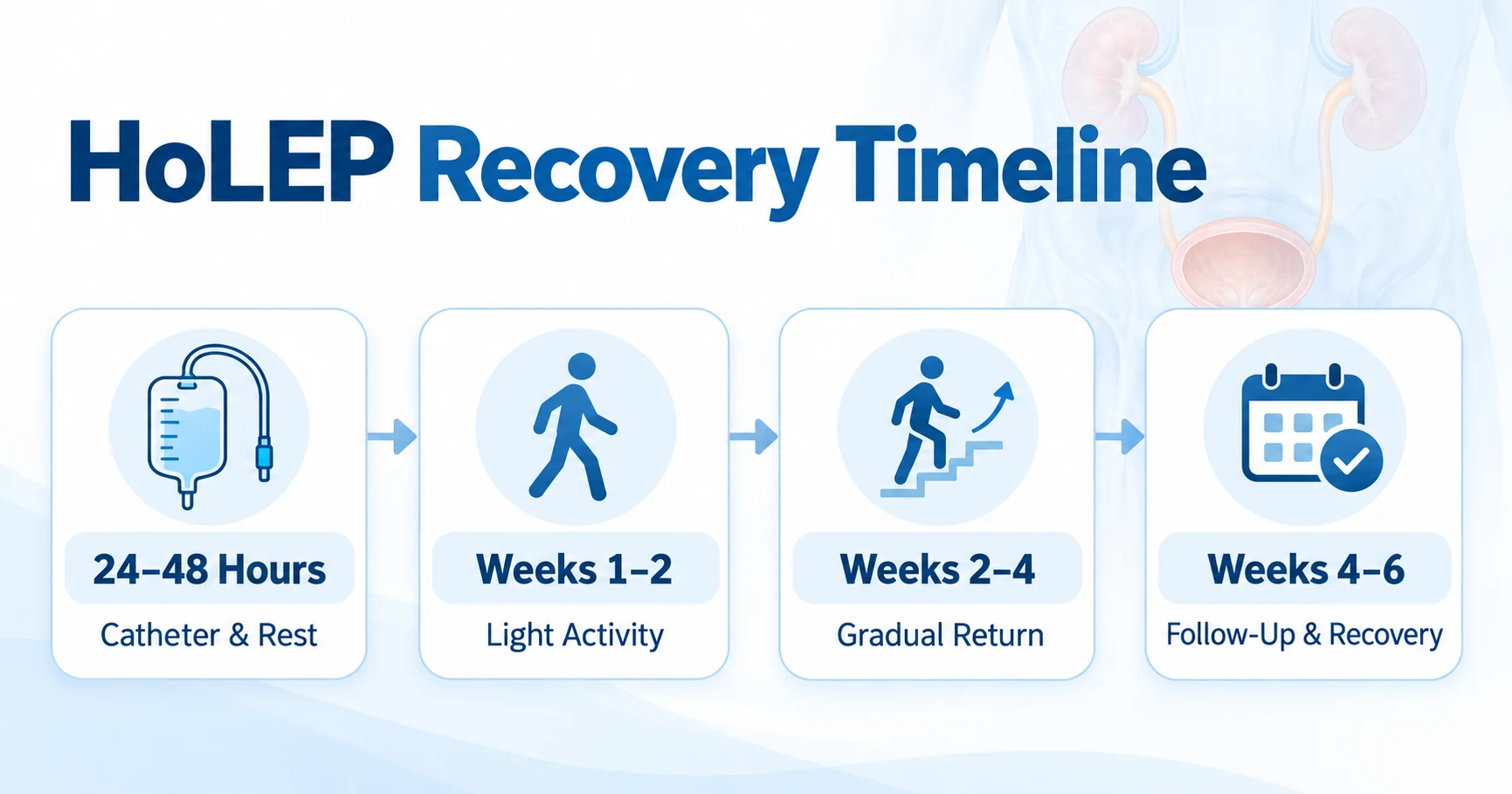
Typical removal occurs within 24–48 hours for uncomplicated cases, but some patients may keep the catheter for up to 5 days depending on bleeding or bladder function post‑operative care guide. Your urologist will assess urine clarity, volume, and any residual blood before deciding the exact timing.
If you notice sudden heavy bleeding, severe pain, or an inability to pass urine after removal, contact your surgeon immediately.
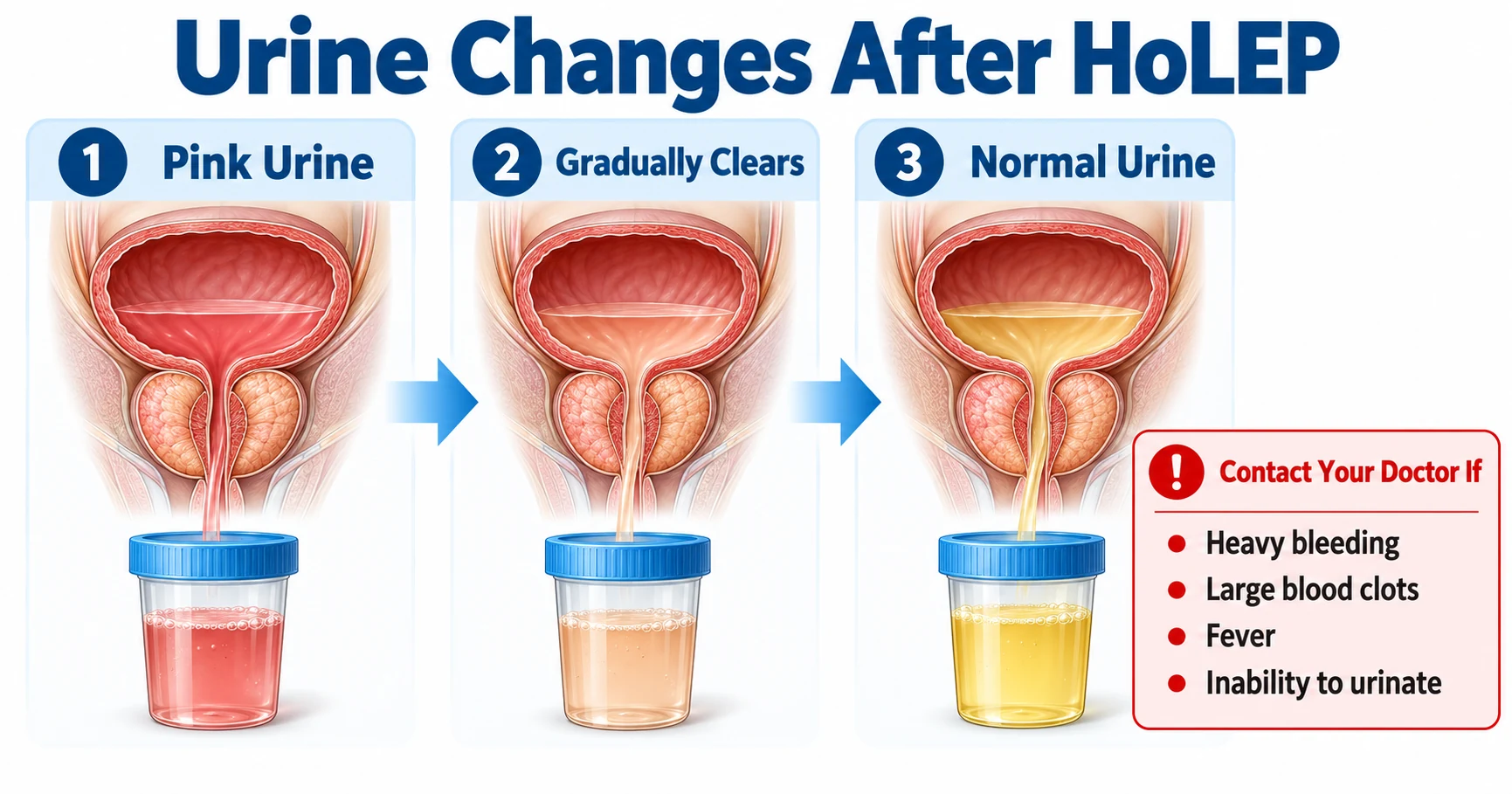
After the catheter is removed, the urinary stream often improves dramatically, but a transitional period of changes is common.
For the first few days you may see pink or light‑red urine due to residual blood. This usually clears within a week as the bladder heals early postoperative observations. Darker blood or clots that persist beyond three days warrant a call to the clinic.
It is normal to urinate more often (up to 10–12 times a day) as the bladder adjusts to a larger capacity and the prostate tissue that was obstructing flow is gone. Burning sensations can occur when the urethra is irritated, but they should lessen within a week.
Contact your doctor if you experience any of the following:
Even though HoLEP is less invasive than traditional open surgery, the prostate tissue still needs time to re‑epithelialize. Over‑exertion can cause bleeding or delayed healing.
Walking a few minutes every hour helps prevent blood clots in the legs and lungs. Stairs are permissible, but avoid running, heavy lifting, or prolonged standing post‑operative activity instructions.
Most surgeons advise not lifting more than 10 pounds (about a gallon of milk) for the first two weeks. Driving is often allowed the day after surgery if you feel comfortable and are not on narcotic pain medication, but avoid driving long distances or in heavy traffic until you are confident in your urinary control.
Light housework, gentle gardening, and short walks are fine. Straddle activities such as bicycling, riding a lawn mower, or using a motorcycle should be postponed for at least six weeks because the pressure on the perineum can disrupt healing Cleveland Clinic recovery timeline.
After the two‑week mark you can slowly re‑introduce cardio and resistance training, starting with low‑impact options like stationary cycling or swimming. Increase intensity only as your surgeon confirms that bleeding has stopped and the urinary stream remains strong.
Structured follow‑up ensures any complications are caught early and helps you track functional improvements.
Some urologists schedule a final check at three months to confirm long‑term success.
Analgesics (often acetaminophen or short‑course NSAIDs) manage pain, while antibiotics may be prescribed for 24–48 hours to prevent infection. Drinking plenty of fluids—about 2–3 liters per day—helps dilute urine, reduces irritation, and prevents clot formation post‑operative medication advice. Avoid caffeine and alcohol in the first week, as they can irritate the bladder.
Keep a simple log of urine color, frequency, and any episodes of urgency or pain. This record is valuable during follow‑up visits and helps you notice trends that may require medical attention.
For a deeper dive into prostate health and surgical options, see our HoLEP suitability for large prostates article. If you’re dealing with a weak urine stream, our guide on causes and diagnosis provides additional context. And for general post‑operative recovery tips, check out our RIRS recovery guide.
Most patients have the catheter removed within 24–48 hours, though some surgeons keep it up to five days if there is significant bleeding or bladder irritation.
Yes, pink or light‑red urine for the first few days is typical as the bladder heals; however, large clots or bright red urine lasting more than three days should be reported to your doctor.
Driving is often allowed the day after surgery if you are not taking narcotic pain medication and feel confident in your urinary control, but avoid long trips for the first week.
Avoid lifting more than 10 pounds, running, heavy gardening, and any straddle activities such as bicycling or riding a lawn mower for at least two weeks; straddle activities are best postponed for six weeks.
Most men can resume light office work within one to two weeks; those with physically demanding jobs may need four to six weeks before returning to full duties.
Typical follow‑up includes a catheter check within the first two days, a clinic visit at one week, and a comprehensive evaluation at four to six weeks, with a possible final check at three months.
Recovering from HoLEP is a step‑by‑step process that balances careful catheter management, monitoring urine changes, and gradual return to activity. By following the outlined timeline and staying in close contact with your urologist, you can enjoy the long‑term benefits of a smoother urinary flow and a healthier prostate.
Plot no 70, Moreshwar Heritage, Sector 5, Ulwe, Navi Mumbai, Maharashtra 410206
For Booking: +91 8591009591
Chat With Us
49, Sion – Panvel Hwy, Sector 7, Vashi, Navi Mumbai, Maharashtra 400703
For Booking: +91 8007542142
Chat With Us