
Urinary tract infections (UTIs) are often associated with women, but men are not immune. Although the incidence is lower—especially before age 50—when a UTI does appear in a man it frequently signals an underlying issue that requires careful evaluation. Understanding the why, the what, and the when can help you act quickly, avoid complications, and get the right specialist care.
A UTI in men is an infection of any part of the urinary system, including the urethra, bladder, prostate, or kidneys. Bacteria, most commonly Escherichia coli, travel from the gastrointestinal tract into the urinary tract and multiply, causing inflammation and the classic symptoms of burning and urgency. Because male anatomy includes a longer urethra and the prostate gland, infections often involve deeper structures and are classified as “complicated” UTIs. For a concise overview, see UTI in Men: Causes, Symptoms & When to Worry.
These factors reduce the natural flushing action of urine, allowing bacteria to linger. According to Male sex and UTI risk, male UTIs are frequently labeled “complicated” because of such underlying structural or functional problems.
Men with a UTI often notice a combination of the following:
These signs overlap with prostate issues, making diagnosis tricky. The symptom checklist from WebMD guide to UTIs in men provides a helpful reference for patients and clinicians alike.

In men, most infections are considered complicated because they involve the prostate or upper urinary tract. Specific red‑flag scenarios include:
Complicated UTIs demand a broader diagnostic workup, as highlighted by BMJ Best Practice on UTIs in men.
When you present with urinary symptoms, a urologist will typically order:
In some cases, a cystoscopy may be performed to directly visualize the urethra and bladder interior.
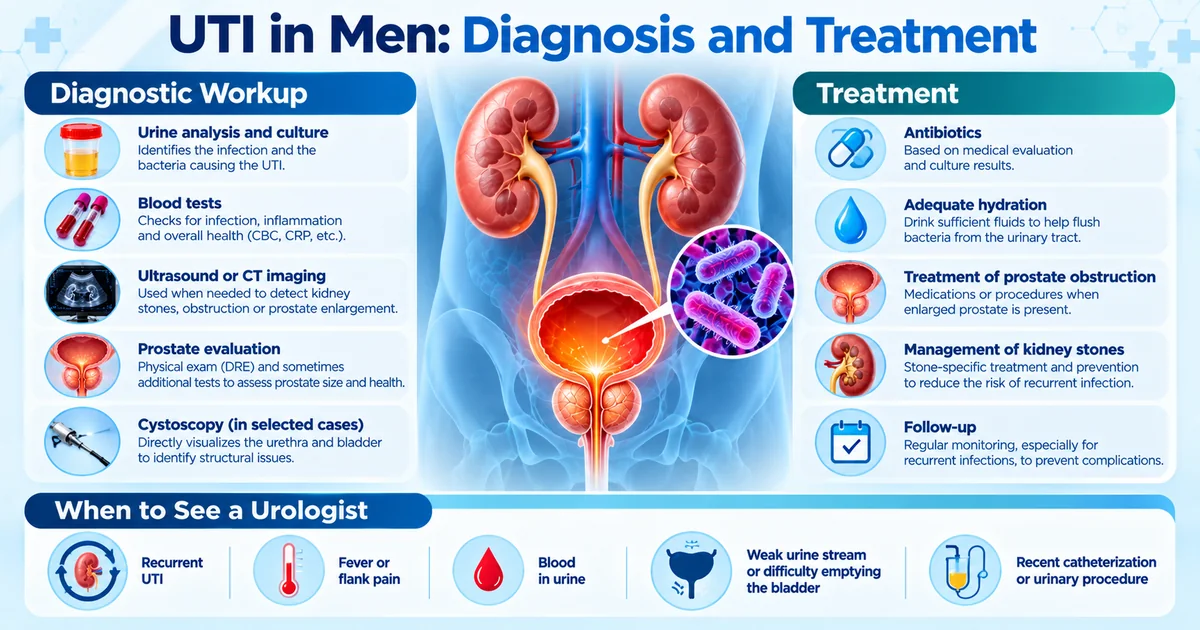
Antibiotic therapy remains the cornerstone of treatment. The choice of drug depends on culture results, local resistance patterns, and whether the prostate is involved. Typical courses range from 7‑14 days for uncomplicated bladder infections to 4‑6 weeks for prostatitis.
Addressing the underlying cause is equally important. If an enlarged prostate is the culprit, medical therapy (alpha‑blockers, 5‑alpha‑reductase inhibitors) or surgical options such as HoLEP may be recommended. Our detailed guide on Is HoLEP Suitable for a Large Prostate? What Patients Should Know explains these options.
When kidney stones contribute to infection, dietary modifications and stone‑specific treatment become part of the plan. Refer to Kidney Stone Diet: What Should You Eat and What Should You Limit? for nutrition tips, and Why Do Kidney Stones Keep Coming Back? Causes, Tests & Prevention for prevention strategies.
Prompt specialist referral is advised in the following situations:
These criteria align with recommendations from Should You See a Urologist for a UTI? and underscore why early evaluation can prevent chronic infection and kidney damage.
While you cannot eliminate all risk, several habits reduce the likelihood of a UTI:
Adopting these practices, combined with timely medical attention, helps keep the urinary tract healthy.
Yes. Men can develop UTIs, though they are less common than in women and usually involve the prostate or upper urinary tract, making them more likely to be classified as complicated.
Treatment duration varies: 7‑14 days for a bladder‑only infection and up to 4‑6 weeks if the prostate is infected, based on culture results and severity.
See a urologist if you are over 50, have a fever or blood in urine, experience recurrent infections, have prostate‑related symptoms, or have recently used a catheter or undergone urologic surgery.
Yes. An enlarged prostate can obstruct bladder emptying, creating a breeding ground for bacteria and increasing the risk of infection.
Most male UTIs are labeled complicated because they often involve the prostate, kidney, or structural abnormalities, requiring a more extensive workup than uncomplicated infections in women.
UTIs in men are uncommon but often signal an underlying problem that warrants urological evaluation. Recognize the symptoms, seek prompt care, and follow preventive steps to protect your urinary health.
Plot no 70, Moreshwar Heritage, Sector 5, Ulwe, Navi Mumbai, Maharashtra 410206
For Booking: +91 8591009591
Chat With Us
49, Sion – Panvel Hwy, Sector 7, Vashi, Navi Mumbai, Maharashtra 400703
For Booking: +91 8007542142
Chat With Us